Raising E and Yo

     Sociologist Dalton Conley was published in Psychology Today concerning the unique names he chose for his son and daughter. He defends saddling his daughter with a one letter name, E, and his son with the longest name registered in New York City, Yo Xing Heyno Augustus Eisner Alexander Weiser Knuckles. Conley started his article with humorous insight on how his children were named and why. He felt strongly that his children would not suffer any long term harm from these names.

     Following the explanation of E and Yo’s names he discusses how these names have pulled his children into the spot light. He relays his daughter accepts her name by including their conversation in the article. His son’s interview on Anderson Cooper’s 360 and inclusion to books about names made his son feel proud. At that time his son was 4 and Conley was concerned how he might feel once he gets older. By writing how his children accept their names it confirms to him he did no wrong at this point in their lives.

      The author makes a point of his wife’s eldest daughter’s name, “Mister Jamba Djang Ulysess Hope.” This is to show support in the names he chose for their daughter and son. He admits there are readers who strongly dislike his name choices and stated he had “come across posts calling me a child abuser” online. Defending himself, he states, “American parents are able to choose any combination of letters (or even numbers and alphanumeric characters) for their children (or themselves).”

     About halfway through the article, Conley discusses studies to find if there were any negative consequences to having an odd name. He is confident in the name choices he has made but decides to learn more of their possible affect later in life. He had specifically named his son to “challenge assumptions about race and assimilation.” Conley wants to educate his readers why having a unique name is important but also points out the drawbacks. He gave many examples of studies of names and the results. One study showed having an ethic name lead to less job interviews. This study confirmed that employers were calling four times as many applicants with white names for job interviews. A study of having a typically black name stated that student was less likely to be recommended for gift/honors programs by teachers and school administrators. It was also found that boys with feminine names tend to get in more trouble than masculine named boys.

     Conley makes a smooth transition to a more current work of psychologists “suggesting that the restraint that kids with unusual names learn when they are teased leads to better impulse control in all areas of life.” This contrast is how the author promotes his child naming choices. Because the name Dalton was used to make fun of him as a child and he adjusted to a normal life, so will his children. His son and daughter, now 12 and 13, are self-conscious of introducing themselves but are not subject to ridicule by their peers.

     By reasoning he turned out fine and now his name is even popular, simplifies it for Conley. Unique names for his children will make them unique people. They will cope with the given names and become stronger people. Conley is proud to have a hand in his children’s names and what they are becoming as individuals. He clearly manipulates his readers to side with him because “his children” are happy with their names. Stating that Yo’s name will be a dime a dozen in 35 years is a stretch but he relays his point. Having a unique name does not automatically lead to a life of torment, nor does it cause maladjusted adults.

Works cited: Conley, Dalton Psychology Today, “Raising E and Yo…” Published on March 01, 2010
Homeless but happy

The word is the parental homestead is going up for sale.  God Bless the person who buys this straw house.  So, once again, I am mortgaged to the hilt with my husband, yet homeless.  Now I contemplate the options I have of getting a new place to live. 

I could move onto campus, but there are no overnight visitors aloud.  I can’t live somewhere that I am not permitted to take my daughter.  I could get an apartment close to campus but have to consider Tesla starting school.  John has taken the liberty of enrolling her in the school district of our home in Windsor.  When I brought up registering her for Dover he had a meltdown.  He told me today he had his lawyer send a letter to my lawyer concerning Tesla.  He wants her to go to school from our house but will agree to let me have her 3 days a week or something like that.  For that to work, I would need to live close to Windsor or in Windsor. 

I’m not giving up parental rights to my daughter.  Not going to happen.  With that thought in mind, I struggle to do what’s best.  I refuse to remain on a mortgage of a house I don’t live in, especially with the latest girlfriend and her 4 kids residing there.  The mortgage is way behind and now our credit is ruined so I don’t see how John thinks he can keep our house to himself.  He has warned me if I make him sell the house he will ruin me….how much more ruined can I get?  At least I’m not scared!!

So, my options: 

Should I use my school loan to get an apartment?  Try to get an apartment near the house I own with John and keep the 50-50 custody agreement?  Give in to his demand of having majority custody and patiently wait for Tesla to announce she wants to live with her mom?  Get an apartment in Dover and fight for custody?  Get an apartment in Dallastown and move Zeth in before his father boots him out over the summer?  Rent a house with my sister and nephew?  That would be four people and two dogs and probably, very expensive.

  My God this is a mess and I only have one person to thank.  Myself, for falling in love with an asshole.

Thoughts and comments appreciated!  House and apartment rental leads also appreciated!!

~P.

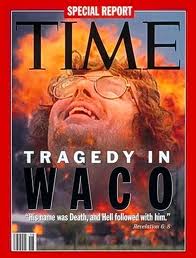
Tragedy at Waco 1993

     David Koresh, leader of the Branch Davidians in Waco, TX, was an expert at making conventional Christian doctrine and ideology support himself as the second Christ.  Using the Bible, particularly the Books of Daniel, Psalms, Isaiah and Revelation, he preached to his followers about the impending apocalypse and his own involvement in causing its start.

     Koresh’s Biblical apocalypticism was based on sacred text, (The Bible) an inspired interpreter, (Koresh) and the fluid context which an interpreter finds himself in.  (The government controlled the context ie: hostage rescue)  Koresh and his followers were deeply devoted to studying Biblical text.  Drawing from the Book of Revelation Koresh’s message was “highly systematic, rigidly consistent, and internally logical.”  According to his interpretation, Babylon, found in the Book of Revelation was the “evil government” and the federal agents sent on the purposed rescue mission were representing the 5th Seal.  To Koresh and his followers, surrendering to anyone but God was out of the question unless Koresh received word from God to do so. 

     This delay caused by Koresh waiting to receive God’s instructions irked those in charge.  The FBI was frustrated at the stand-off and showed little interest in hearing what Koresh had to say.  To them his words were senseless and those of a man with psychological problems.  The letters Koresh had written to explain his ideologies were passed off as babble and very little attention was given to understanding Koresh’s true intentions. 

     Sadly, the FBI promoted the persecution of Koresh and charged that he was a cult leader, child abuser, and rapist.  During the stand-off no proof was ever found to back these vicious statements.  As with Early Christians, persecution of new ideas was common.  Koresh expected to be persecuted just as Jesus Christ himself had been.  The Early Christians were prisoners to Roman Authority and now in 1993, Koresh who declared himself the second Christ based on Psalms and Isaiah mentioning the second Christ by the name Koresh, was under the same threat.   He believed and convinced his followers that they were being taken prisoners under governmental authority. 

      The whole scenario of this hostage rescue situation has an apocalyptic theme.  Preaching of the immanent return of Christ has taken place ever since his death.  It is a violent, fiery prediction based on the Book of Revelations.  In Koresh’s eyes, the attack of his fortress could only be viewed as the start of apocalyptic times.  There was no other way for this group of devoted Christians to view it as anything but the end.  The only statement Koresh gave to the FBI was they would leave the compound when God told him it was time.

     During the stand-off Koresh spent the majority of his time reading The Bible and trying to understand for himself what was taking place.  The letters he wrote and gave to his lawyer were passed on for examination to a college professor with no religious background,.  His determination that a peaceful end to the stand-off was not possible led to the FBI’s use of a gas attack on the compound.  The attack was tragic as the compound caught fire, trapping the innocent people inside and taking their lives. 

     There are many ways this stand-off could have gone differently.  Had the FBI made sincere attempts and sent agents with religious backgrounds to handle the negotiations or even brought in an outsider with knowledge of The Bible, perhaps this could have ended peacefully.  I don’t believe Koresh was purposely trying to cause the 5th Seal to be broken thus leading the government to attack.  Based on the reading, Koresh appeared to be forth-coming with his beliefs and reasoning for the accumulation of weapons.  The FBI was angered by Koresh’s absolute refusal to surrender to them and chose to take matters into their own hands.

     The entire rescue mission, based on false information of abuse ended the lives of 130 men, women and children.  Clearly these were unnecessary deaths at the hands of government intent on forcing a man to follow their commands.  Had someone in charge had the sense to send in people open to understanding a new religious ideology, this tragedy could have been avoided.  This incident left a black mark on our government’s historical record of backing religious freedom and ended the careers of many high level figures of the U.S. government.

~P.

Toad licker

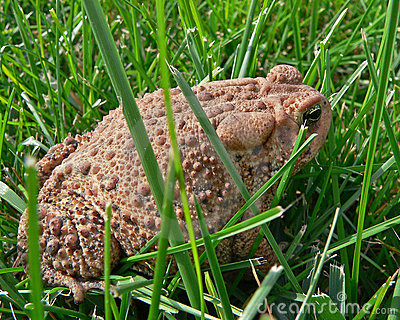
Bumps are beautiful

Teddy Toad had a bad case of warts. It embarrassed him, but there was no wart treatment for a toad.

“Why can’t I be a frog?” he asked his Mama.

Sighing, Mama Toad replied, “Because we are toads, sweetheart. You wouldn’t like being a frog. They spend all their time in the water.”

“I might not mind being in the water all the time if I had smooth skin. Instead I have dry skin and all these brown, ugly bumps.” He complained.

“You can’t change what you are Teddy. Your bumps give you personality,” she explained.

“Personality!” he exclaimed. “I don’t want personality! I want beautiful skin No one ever calls me Pretty Boy!”

“Calm down son. I’ll talk to Daddy Toad and see if we can take you to see a dermatoadalgist. I heard just the other day that Sparky went to the orthodogist and had his overbite fixed. The mail man isn’t going to appreciate that.”

Teddy’s eyes looked glassy and sad. He didn’t see humor in Mama comparing his situation to the neighbor’s stupid dog. Mama Toad was concerned he might be going to the mushroom farm next door to sooth his sadness, but decided not to mention her suspicions. “We will figure something out. Don’t hop off to far. Daddy will be home soon and I have fly soup on the stove for dinner.”

“Yes Mama” he replied already hopping towards the door. “I’ll be right outside.”

The weather was beautiful and Teddy took advantage of it stretching out his long legs in the sun. He wasn’t sure when his dad would return. Closing his eyes he drifted off, the sun warming his cold-blooded body. I’m too sexy for my skin, he thought as he settled into the first stage of sleep.

I’m too sexy for my skin…too sexy for my skin. He looked at his reflection in the mirror and sighed. I’ll just peel my skin off and see what’s underneath. It has to be better than the bumpy mess I have now. Reaching back he realized he couldn’t do this himself. A mouse joined him at the mirror and asked what he was doing. “I have to shed my skin,” he answered. “Will you help me please?”

“Certainly,” the mouse replied. “What should I do?”

“Pull my skin off with your little paws,” Teddy said beginning to wonder if this process might hurt. The little mouse sat up and rubbed its front paws together preparing to assist his new friend. Not sure exactly how to proceed he nervously reached out with his tiny paw. Teddy was ready but the mouse hesitated. “Come on mousy! Just grab my skin and tug!” he encouraged. Mousy reached out and grasped a bump in each paw and tugged. The bumps didn’t budge. “Pull harder!” Teddy cried. Mousy yanked the warts with all his might but had no effect on Teddy’s skin.

“I’m sorry but I can’t pull your skin off. I must not be strong enough.” Mousy explained. He twitched his whiskers wondering why a toad would want to remove his skin. “Good luck!” he wished as he scuttled off.

Mama Toad watched Teddy as he soaked up the sun. She was deeply concerned about his desire to shed his toad skin. She found his warts adorable and no different than those on her and Daddy Toad’s skin. Daddy Toad was gorgeous in her eyes and she was proud to be his wife. They lived a good life in their private toad home. All her babies but Teddy were grown and out on their own. Teddy was her last egg to split. It’s hard for any momma to see her last child grow into their skin and enter the world on their own four feet. Mama Toad began to tear up watching Teddy snooze in the yard. She dried her eyes with a piece of leaf and went back to her soup.

I’m flying Teddy thought as he flapped his wings. This is amazing! Why would I want to be a frog if I can be a bird? He tilted his body to the right and soared over the neighbor’s farm. Teddy saw the pond below him and laughed. No, I don’t want to be a frog after all. This was a bird’s life and he liked it. He glanced briefly at his wings and realized they weren’t wings after all, just his spindly legs. My wings…my wings! Where did they go he thought frantically as he fell from the sky. He made a splash into the water drawling the attention of Sparky who was lazing in the sun. Sparky dashed toward the pond to see what made such a splash. “Help me! Help me!” Teddy cried forgetting he could swim just like the frogs in the pond. Sparky dove into the water without hesitation. He paddled to Teddy and gently grasped him with his newly aligned teeth. He swam back to land and carefully laid Teddy on the ground. He wasn’t moving and Sparky was very concerned he didn’t make it in time. Sparky barked excitedly hoping to bring Teddy back from the deep abyss. Teddy’s legs began to twitch, showing signs of life. Sparky began to lick him hoping this was the turning point and Teddy would survive.

“Sparky! Get the hell away from that nasty toad!” Becky screamed. She raced across the yard towards the pond waving a checkered dishtowel at her dog. “Stop licking that toad!” she screeched at a high pitch, closing in on the pair quickly. Sparky raised his head acknowledging his owner voice and backed away from Teddy. Becky separated the two, pulling Sparky back by his collar. “That is disgusting licking a toad. Next you’ll have warts growing on your tongue and will need another trip to the damn orthodogist. Fixing your teeth cost enough!” she admonished.  She picked up the toad with the dishtowel and tossed it back into the pond. Sparky whined and tried to chase after the toad. “Oh no you don’t. Get your furry ass back on the porch,” Becky ordered.

Teddy awoke suddenly; his legs twitched in spasms. He was in sinking in the pond and confused by what was happening. Swim he thought. He began moving his legs and swam toward the surface. As his bumpy head broke the surface he felt something grab his leg and pull him to the edge. He was safe at last. Mama and Daddy Toad were by his side checking over his body for signs of injury.

“Oh Teddy, what were you doing? You’re not a frog, you’re a toad!” Mama Toad cried. 

Daddy Toad looked Teddy in the eyes, “Son, your Mama told me you wanted to be a frog. Is that what you were trying to be?”

“No Daddy, I wasn’t trying to be a frog,” he replied. “I remember I was hopping through the mushroom field and ran into a field mouse. He tried to wrestle my warts off but they wouldn’t budge. Then I was flying like a bird but I didn’t have wings so I fell into the pond. Sparky saved me from drowning but his owner tossed me back in. It took all my might to swim to the surface and then you pulled me to shore.” Teddy had a crazed look in his eyes causing Mama and Daddy Toad concern. Mama Toad knew that look. She had seen it in the past with Teddy’s brothers and sisters.

“Teddy, we want you to stay out of the mushroom fields. That fungus is bad for your skin.”

“Yes Momma, I understand now. I promise to stay away from the ‘shrooms and take better care of my skin.” Relieved by Teddy’s recovery and sincere words, the three hopped back to their house and sat down for a family dinner.

~P.

Just say go

JUST SAY GO

 The race was on! It was just the two of them but it made no difference. The determined look on her face was so serious. His toothy grin showed his confidence of taking the win. Their cheeks were red and foreheads sweaty as they waited to hear the word “go!”

“She gets a head start because she’s two years younger than you.”

“Fine, I’ll still smoke her!” he responded.

“You have to run around the garage too.” Rolling his eyes he agreed to the rules, “Just say go twice so I know when I can run.” 

“Ready, set, go!” I yell cheerfully. She took off in the wrong direction confusing all three of us. “Come back and we will start again.” I tell her giggling at the silliness. She returns to the start line, hands on her hips like I had sent her in the wrong direction. “Run around the house and back to here as fast as you can ok?” I asked. She nods her head, eager for the restart. “Go again!” I shout and this time she bolts in the correct direction. Her chubby little legs pumping up and down in sync with her chunky arms she tore around the first corner. I could hear her feet pounding the ground until she made the second turn just past the air conditioning unit.

“Go!” I shouted again and he was off like a heat-seeking missile. His lean arms and legs sharply contrasted hers and were seriously engaged in the race.  He was making tracks to catch his opponent with the head start and less ground to cover. They both disappeared around the front of the house and I turned to watch for their reappearance.

She made the final turn of the lap, leaping onto the stepping stones separating the house from the garage. I had a brief glimpse of him as he zipped by to round the garage. He impressed me with his speed. She took the last few steps, slowing down as she came to the finish line. “Yes!” she shouted, raising her hands in the air as a sign of sweet victory. He came from behind the garage just in time to see her triumphant finish. Not slowing down, he threw himself to the ground rolling across the finish with enthusiasm only a seven year old could possess.

His spectacular finish did not impress her. She pointed to his jeans and said, “You got dirty knees now.”

“Yeah, I know.” He responded while I calculated how much prewash would be needed to get the stains out. Slightly winded but showing no sign of defeat he leaped to his feet. “Aunt Pattie, will you say go again?” he asked.

“Absolutely!” I answered, wondering how many laps it would take for them to be ready for bed at 8PM.

~P.

Martyrdom and Memory Review

Pattie Crider

Professor Shusko

Christianity 275

Martyrdom and Memory Book Review

            Elizabeth A. Castelli, author of Martyrdom and Memory, clearly stated her thesis in the book’s introduction as, “a systematic means to understand the Early Christian collective memory of historical experiences of persecution and martyrdom as formed by culture.”  (Pg. 4)  Castelli believed it is the memory of Roman acts of persecution toward Christians that developed the legacy of martyrs.  Her novel, comprised of six chapters, began with the collective memories of early Christian martyrs and closed with the exploration of modern day martyrdom.

            Chapter one, titled “Collective Memory and the Meanings of the Past,” urges the reader to move past “what really happened” and focus on the memory of persecuted Christians.  French sociologist, Maurice Halbwach stated, “Memory is a socially constructed function that operates as an ideological ground for the present.” (Pg. 12)  The earliest written recollections were not recorded until long after the events had passed.  Due to this time lapse, scholars question the accuracy of martyr’s legends.  In accepting the documentation as a collection of memories, Castelli leads to the study, not analysis, of martyrdom. (Pg.24)  The question of truth and accuracy put aside, I was able to get a deeper understanding of the persecution of Christians and the development of martyrs.

            Chapter two, titled “Performing Persecution, Theorizing Martyrdom” gave historical accounts of “textual and artifactual traces of martyrdom’s ongoing cultural production.” (Pg. 33)  Roman historical records of law indicated the Christians were persecuted for many reasons.  They were charged with breaking civil laws for refusing to perform the required state sacrifices. (Pg.37)  The Romans also charged the Christians with outlandish crimes such as cannibalism, infanticide, incest, magic, and treason. (Pg. 42)  The false charges by the Romans are what made martyrdom possible because “Martyrdom is not just an action, it requires an audience.”   It also includes violence, suffering, and a meaningless death.  Jesus Christ’s sacrifice is the template for theorizing on Christian martyrdom. (Pgs. 34-35)  I understand this theory because Jesus was the only perfect human on earth, and he was persecuted and crucified despite his innocence.  This chapter also theorized why Christians refused to participate in the sacrificial rituals.  The obvious reason was it broke the commandment to only worship God, but it also removed Christians as the sacrificer to the position of sacrificial victim.  Essentially, the faithful followers of Christ were willing to sacrifice themselves to the one, true God. (Pgs. 51-52) 

            Three faithful followers are introduced in chapter three titled “The Martyr’s Memory.”  This chapter covered the self-writings of Ignatius, Perpetua, and Pionius.  All three of these martyrs practiced the ascetic act of renunciation.  I have learned about renunciation through-out two terms of religion and was able to fully grasp what these Christians gave up in their lives to live for Christ.  Ignatius basically wrote himself out of material existence in his Letters to the Romans. (Pg. 78)  He documented his sense of humiliation, submission, and lowliness but still felt he was unworthy of the torture and suffering which would ultimately lift him to the hands of God.  Ignatius persuaded others not to intervene on his behalf because through this self-sacrifice he was imitating Christ’s sacrifice for all mankind. (Pg. 84) 

            Perpetua’s diary is the earliest text by a woman.  The Diary of Perpetua shared her desire to be more than just called a Christian but to really be a Christian.  Perpetua was a well-born Roman wife, mother, and a Christian visionary.  Her renunciation of worldly roles enabled her to receive visions from God.  Her diary accounted a frightening experience in prison and also shared the emotional and physical pain of separation from her newborn.  God intervened on her behalf to wean the baby and dry up her milk supply so she could give full attention to her spiritual journey. (Pgs. 85-9)  I have no doubt that Perpetua was receiving visions from God, because I have suffered from separation of an infant.  The only thing that would have continued to keep me from my child would have had to be visions from God, because the bond between mother and infant is so incredibly tight. 

            Pionius’ texts are the most theatrical, and he portrayed himself as a master orator.  His commentary is witty and he purposely provoked a temple warden by “chaining” himself to other prisoners with woven cord.  This was done to show they were prepared to be sacrificed for refusing to participate in the Roman sacrificial rituals.  (Pg. 99) His words to the warden were “Light a fire and we will climb up to it ourselves.”  (Pg. 101)  The three Christians’ attempt to share their stories during their execution is written proof of their love and dedication to God. 

            Chapter four, titled “Martyrdom and The Spectacle of Suffering,” outlined the two vastly different views of Christian suffering.  The Romans were thrill-seekers and viewed executions as a functioning spectacle.  (Pg. 105)  They gathered in arenas to watch Christians be mauled by dogs, set on fire, or ripped piece by piece.  There were no limits to what the Romans could do, and these spectacles were promoted as religious, political, social, and civic functions in society.  (Pg. 107)  The Romans promoted the spectacles as special events that all citizens should attend.  Sharply contrasting this ideology was the Christian view.  I previously believed that Christians would view this as horrific acts of murder but learned in studying 1Corinthians 4:9 that Paul had proudly proclaimed, “We have become a spectacle to the world, to angels and to human beings.”  The Christians did not fear death at the hands of the Romans, but instead embraced it as their “completeness of faith” to God.  (Pg. 105)  Interestingly, the term martyr is derived from the courtroom meaning “witness.”  In this context, it is not what the “witness” has seen but the performance of the witness that transforms the seer into the seen, the testifier into the testimony. (Pg. 133)  I understand this as a martyr (witness of God) who willingly came forth and proclaimed their faith knowing they would die but hoped that those witnessing would see and understand their decision to accept death in the name of God.

            The fifth chapter, titled “Layers of Verbal and Visual Memory-Commemorating Thecla the Protomartyr” focused on the author of the Life and Miracles of Saint Thecla.  He claimed he did not write them out of concern that Thecla’s acts would become lost in oblivion or obscurity.  Instead, his goal was to assure that no one was ignorant of the words and acts of the Apostle Paul and the Saint Thecla.  This anonymous writer declared the acts of Thecla as “guarded by God in the service of his own perpetual fame.”  (Pgs. 134-5)  The story of Thecla is the earliest in literature concerning a Christian woman’s piety (Pg. 138) and Castelli found her to be the prototype for women martyrs.  Castelli noted in her book “The Acts of Paul and Thecla are well known and require only a brief, not detailed, exposition here.”  (Pg. 140)  Her focus is on the need for asceticism and described Thecla as “a Christian athlete and the virgin (who) is taken captive.”  Her renunciation of her wealth, family, lineage and all worldly goods to fully dedicate herself to God caused her family to declare her dead to them.  I found irony in this as I continued to read, because while her family considered her dead, her memory has lived on.  In fact, the earliest artistic artifact found was a fresco painting in a burial chamber dated in the mid-4th century depicting Daniel and Noah, Thecla and Jesus, Abraham and Isaac, Adam and Eve. (Pg. 157) Not bad for a woman whose family disowned her.

            The sixth and final chapter of Castelli’s book took me to the 21st century.  Titled “Religion as a Chain of Memory” she studied the story of Cassie Bernall of Columbine High School and compared it to the legacy of early Christian martyrdom. (Pg. 172)  The story of Cassie entering martyrdom was short and easy to understand.  She was asked if she believed in God, and when she replied “yes” she was executed.  When survivors shared what they had witnessed, Cassie was at first persecuted because of her reckless past.  As the media learned she had recently been saved during a youth ministry, Cassie was immediately presented as a martyr.  Initially her parents objected to her martyrdom (Pg. 182) but came to accept this title.  The memory of their daughter inspired cults, (as did Thecla) websites, CD’s, haunted house themes, plays, hats, key chains, t-shirts, necklaces and more. (Pg. 187)  Castelli found there was a negative view of this marketing and it had been labeled “the latest splash in American self-help.”  Her question to those with this view: “Were there critics in antiquity who called into question the tastefulness of pilgrim flasks bearing images of a half-naked Thecla…?” (Pg. 189)

I applaud Castelli for raising this point.

            In conclusion, Castelli’s book was a pleasure to read.  Her ability to write about the early Christian memories of martyrs and carry the understanding of their suffering from centuries ago to modern time was very effective.  I have a broader understanding of how martyrdom was developed by Roman authority.  Had the Romans not persecuted the Christians, martyrdom may never have come to exist.  It is collective memories of martyrs from the past that are now used to establish martyrdom in our modern times. 

Castelli, Elizabeth A.  Martyrdom and Memory.  New York. Columbia University Press.  2004. Print.

Lambda Drag Show Pics

This slideshow requires JavaScript.

Slideshow of York College of PA’s Lambda Drag Show held on March 18th.

Great job contestants and for the first time ever….a tie for Queen!

Thank you host, Brian “Cookie” Holt!

~P.

Spoof Ad

taco bell always makes my buns smell

Spoof Ad for my art class

What the Doctor said

Everyone loves getting an “thatta boy” or in my case, girl.  This is the letter my professor sent on my behalf for a scholarship in professional writing.  I don’t know how much the scholarship is for but any amount is helpful in paying tuition!

~P.

Dr. Travis Kurowski
441 Country Club Rd.
York, PA 17403

April 19, 2011

 To Whom It May Concern,

I am writing to recommend Patricia Crider for the 2011 Carraway Scholarship.

Patricia has been more than a pleasure to have in both my Introduction to Creative Writing course this semester and as an interested, enthusiastic writer and learner on campus, who seems to be constantly working on one writing project or another. Patricia has even taken some of her student projects and began publishing online, and so doing what we hope all of our students will eventually do: taking her classroom work and testing it out in the larger world. What makes Patricia a nice addition to the creative writing classroom, is her constant, often quite insightful, commentary on her peers work.

Perhaps more to the point of this scholarship, Patricia is a motivated, intelligent writer—meaning that she is a constant reviser, always open to suggestion and critique. Many beginning writers—in an effort to perhaps prove their talent to themselves, their peers, or maybe even their professors—often have trouble taking to heart criticism and really applying it to the betterment of their writing. In my experience in the classroom, and at our writer-in-residence workshop this past month, Patricia has taken criticism from other writers and applied it to the betterment of her work—such as the use of specific, concrete images (and the right ones at that) to tell her story, allowing us to more fully imagine her world, which is what we want from our writers in the end.

Sincerely,

Dr. Travis Kurowski

Liberal Education

York College offers a diverse course selection.  How diverse?  Here’s my schedule:

SUMMER

Critical Thinking and Problem Solving (Math)

If only this class could help me solve the problem of still being married.

Elementary Spanish

I’ll be able to curse like a sailor and it will sound SEXY!

Recreational Shooting

Pistols, shotguns and rifles….Hells Yeah!  A country girl’s dream class!!!!!!


FALL

Spanish II

Maybe I’ll start dreaming in Spanish…

History of Terrorism

I can’t imagine this class will be boring.

Terror in Literature

Should prepare me for writing a novel about my life.

Religious Cults and Alien Theory

Hot Damn, I love this college!!

Square Dancing

No, I will not be wearing plaid and cowboy boots.

Sculpture Art

Perhaps a sculpture of aliens terrorizing earth with rifles, shotguns and pistols while singing the Beer Barrel Polka in Spanish.   🙂

~P.