Tainted by Birth: India’s Caste System

Pattie Crider

Professor Waddell

WRT 225

October 30, 2013

Tainted by Birth: India’s Caste System

            Americans take for granted their rights as citizens, but not all countries give their citizens such rights through a democratic system or a written constitution. One such country, India, has grouped the Indian citizens into castes since ancient times based on the beliefs of the Hinduism religion. The word “caste” is taken from the Portuguese word, “casta” which means “race” and all citizens are born into one of multiple caste groups. (Shouler, 157) These castes will determine the quality of life for an Indian person, who they may marry and will mark them permanently until their earthly walk comes to an end. The caste system consists of four named groups and one group which had no formal name but the people are referred to as “untouchables” placing them at the very bottom of civilization. The four castes were based on parts of the body, the Brahmins (mouth), Kshatriyas (arms), Vaishyas (thighs), and Sudras (feet). (SarDesai, 105) A brief explanation of these groups will follow before moving on to the caste referred to as untouchable.

India caste system

            The Brahmin caste was the “dominant group, the very model of the Indian social hierarchy” (Deliege, 32) and the smallest of all in caste size. This group consisted of priests and academics, and the Verdic word brahman means prayer, which would be expressed through the mouth. The Kshatriya caste consisted of the warriors and kings and their responsibility was to protect and rule by use of their arms. This group wears sacred threads indicating they have been born twice, once physically and the second spiritually. (Shouler, 154) The Kshatriya caste and Brahmin caste often worked closely together in order to remain in control of the social order. The small size of the two castes would appear to put them in jeopardy, but the long tradition of Indian hierarchy and religion retains their high-seated positions.

The third caste, named Vaishyas, is made up of merchants or agriculturalists. (Shouler, 155) This group is also referred to as the common people and mainly comprised of farmers. Their responsibility is to ensure there is food for the community and they are an important part of the Indian economy. The physical nature of their work reflects back to their depicted body part, the thighs. The last named caste of India, is the Shudras, portrayed as the feet. (Moraes, 7) This group was considered the lowest of all social groups because they are servants. They perform personal services for the castes above them and those services range from barbers, launderers, cooks, maids, gardeners, drivers and the like. (Kolanad, 157) The only tasks that did not fall to the Shudras were those that were found to be so undignified, it could only be performed by that of an untouchable. To be included in any one of the four castes places that person into an acceptable position within the Indian nation, all others fall into that of an untouchable, the lowest in society and not even considered to be part of humankind.

The Untouchables: Deemed Inhuman

            The untouchables fall below the Shudra caste and were not given a formal caste name. These people were often foreigners, lawbreakers, people from isolated tribes and people stricken by disease.  While the caste system was abolished after the fall of British rule in 1947, (Shouler, 156) and outlawed in the Indian Constitution in 1950, (Kolanad, 39) the inhumane treatment of those people continues today. The untouchables must live by a strict rules implemented by all castes above them, as well as by other untouchables. The untouchables have been given many names over time and also fall into sub-castes in India. There are a substantial number of people that fall into what is presently called the Dalits.

There are approximately 150 million Dalits in India today. (Dowling, np) This number may be low because it is difficult in gathering accurate numbers when the citizens are embarrassed to reveal their caste name. These people are excluded from living in the villages, must dress in rags, eat only scraps and are degraded at all times.  (Deliege, 12) The term Dalit is a euphemism for untouchable and the most common name used. When asked by Robert Deliege what caste an Indian is from, they would often refuse to give their caste name or instead replied, “What does it matter? After all we are human beings like you.” (14) While centuries have passed since the caste system was placed, the treatment of untouchables is still appalling to those of the West. In an attempt to be politically correct, three names have become widely used in place of the label untouchable. Those names are Harijan, Scheduled Caste and Dalits. Gandhi called the untouchables Harijans (blessed through suffering) and worked to see these people treated more humanely. In the past the untouchables deemed to have problems following Indian law were cruelly punished by being fed to wild dogs or burned to death on a “red hot iron bed.” (Flood 59, 60) Gandhi, who only desired a peaceful means of demonstrations in life found this treatment of human-beings unacceptable. In time, the untouchables began referring to themselves, when forced to give a caste name, as being a Dalit, meaning the oppressed people.  Outsiders, generally scholars, choose to identify this group of Indians as Scheduled Caste.

The untouchables can be found in any area of India.  It is not limited to one region or state. Every village has untouchables who must do the “dirty work” that no other caste is held responsible in completing.  These duties always have some tie to filth. (Deliege, 25) The untouchables must use buckets to clean out the toilets, remove waste and dead animals along the streets, clean the bodies of the dead, skin and tan the hides of animals, ward off evil spirits and provide menial tasks considered unclean for the higher castes of the community. This work is always hired out to untouchables to ensure the lives of India’s communities continue to run smoothly. The Dalits were also expected to follow the “unwritten rules” pertaining to their class of people. Dalits could not eat with members of other castes and they must have separate glasses for drinking and utensils for eating; (Moraes, 28) these examples of the expectations nearly make sense in a hygienic matter. Other laws, such as separate burial grounds, segregated classrooms and sub-standard wages (Shouler, 152) are rules enforced strictly to humiliate this class of people. Regardless of the modern era India has entered and the separation of religion and state, the caste traditions are still carried on by Indian citizens.
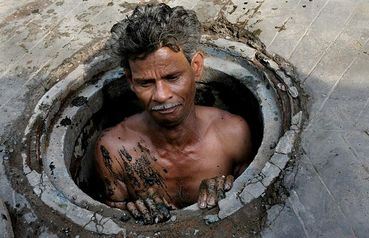
untouchable

            The question today is: have the changes in the law that took place in 1950 made any changes in the lives of those deemed untouchable? Zinkin states, “Untouchability has disappeared because the Constitution makes the enforcement of it an offence. Everyone pretends that caste no longer matters because India is modern.” (177) This may be true in so much that the government no longer recognizes an organized caste system but the reality is the people of India continue the hierarchy tradition to present day. There are millions of untouchables in castes and sub-castes that are given names to cause insult and humiliation. Deliege listed only a few of those caste names, some being, Mala, Nadar, Pulayan, Paraiyar, Chamars, Bhangis and Mahars (21) that continue to lower an Indian to what is considered a non-human. It may seem as though India has not made much progress in freeing the people from being called non-human and living a life of degradation involving the filth of the community, but recently there has been relief as the Indian people have taken a Democratic approach to electing leaders.

Emerging from the Filth

            Gandhi had high hopes for the Dalits and is quoted as stating, “The country will attain the real freedom only on the day a Dalit would become the president of this country.” Gandhi’s life was cut short with his assassination in 1948, but had he lived, he would rejoice that the Indian people elected a Dalit to the presidency. K. R. Narayanan served India as president from 1997 to 2002. (Dowling, np) This was no small victory for the enormous group of oppressed people and since the election of a Dalit to presidency, the lives of the untouchables has improved. Even with the laws passed against discrimination, those who are caste as Dalits remain low in the social order today and those fortunate enough to be born into the higher castes remain high in the social hierarchy despite the changes within India.  While being born into a caste may seem to seal the fate of an Indian, there is the possibility of moving up in the caste system. “One’s birth determined one’s class, which could be altered only with rebirth, depending on one’s karma.” (SarDesai, 104) Based on this spiritual rebirth, an Indian may move up in the caste system as this person has pleased the gods and found worthy to transcend to a higher position in the community. This has been achieved by K. R. Narayanan and numerous other Indian citizens, thus deserving mention in this essay.
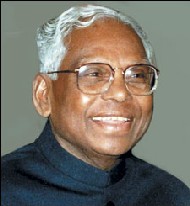
K.R.Narayanan

K.R.Narayanan

Two former Dalits have risen from humble beginnings and shed the caste they were born into. Mayavati has overcome not only being born an untouchable, but is also a woman. She is the country’s most famous lower caste member, according to author Sreedhar Pillai. (np) This year, Mayavati was voted into a four year position of chief minister of Uttar Pradesh, the most populated state of India. She has become an icon for the Dalits that continue to remain in a state of degradation and aspires to one day be the Prime Minister of India. These are lofty goals for a female Dalit, but she has proven her worth and her attaining her stated goal is within the realm of possibility.
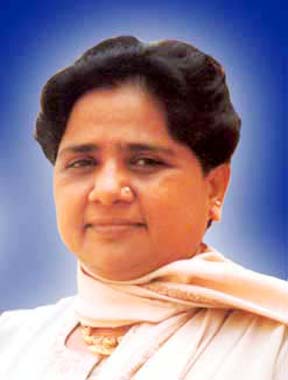
Mayawati

Mayawati

            A second Dalit that has risen above his birth caste is Hari Kishan Pippal. Pippal stated in an interview that “as far as he could remember, people told him he was unclean, with a filthiness that had tainted his family for centuries. Teachers forced him to sit apart from other students and employers did not bother to pay him.” (AP, np) Pippal was not expected to have higher goals in life beyond that his Dalit father, a stone cobbler. Refusing to be passed off as inhuman, Pippal pushed himself to strive for much more in life and despite those who wished to suppress him, at 60 years old, he has made remarkable achievements. He is the owner of a hospital, a shoe factory, a car dealership and a publishing company in India and proof that in this day and age, a person can escape the caste they are born into.

Hari Kishan Pippal

Hari Kishan Pippal

The people who have broken out of the cycle of the caste system are rare and unique. Unfortunately, even with the changes in Indian government, the caste system is still a reality that Indian citizens must learn to live with and adapt to. If nothing else, the inspirational stories of these three people who have loosened the chains that bound them to the caste they were born into give other Dalits the hope for a brighter future. Gandhi predicted the rise of the Dalits out of the filth they have been held to for centuries and while it may take more centuries to end the persecution of these Indians, there is hope–if nothing else–and that is a start.

Works Cited

Associated Press. I was one of India unclean Dalits, now I am a millionaire. The National News. 2011. Web. 28 Oct. 2013.

Daniel, Ahron. The Caste System in Modern India. tripod.com/modernindia. 1999. Web. 27 Oct. 2013.

Deliege, Robert. The Untouchables of India. UK: Berg Publishers, 1999. Print.

Dowling, Mike. “The Caste System at mrdowling.com”. http://www.mrdowling.com. 2013. Web. 27 Oct. 2013.

Flood, Gavin. An Introduction to Hinduism. UK: Cambridge University Press, 1996. Print.

Kolanad, Gitanjali. Culture Shock! India: A Guide to Customs and Etiquette. Oregon: Graphic Arts Center Publishing Company. 1994. Print.

Moraes, Frank. India Today. New York: The Macmillian Company, 1960. Print.

Pillai, Sreedhar. A Dalit Prime Minister. Ibnlive.in.com. 2013. Web. 28 Oct. 2013.

SarDesai, D.R. India The Definitive History. Colorado: Westview Press, 2007. Print.

Shoulder, Kenneth., Anthony, Susai. The Everything Hinduism Book. Massachusetts: F&W Media, 2009. Print.  

Zinkin, Taya. Challenges in India. London: Chatto and Windus Ltd., 1966. Print.


Co-production in the Film Industry between Hollywood and Bollywood

Co-production in the Film Industry between Hollywood and Bollywood

Pattie Crider

York College of Pennsylvania

Abstract

The film industry worldwide has been recognized as a business that requires a cohesive effort of many to produce a single product. This paper will examine the production process in Hollywood, the film “capital” of the United States to that of Bollywood, the film industry of India. The production process of filming and advertising between the two differs greatly. Hollywood has realized the effectiveness of the Bollywood industry and has taken steps to become involved in the production of Indian films seeking to be part of this multi-million dollar industry. This essay will discuss the involvement of film companies from the United States in the attempt to reap the benefits of films produced in the Bollywood industry. I predict there will be a difficult learning curve for the American film companies to realize what makes Bollywood productions successful.

Keywords: Hollywood, Bollywood, film industry

The Co-production of the Film Industry between Hollywood and Bollywood

            Hollywood and Bollywood are the largest film industries in the world respectively. Each country had their own method of producing and promoting the films that best serves them financially. The differences between the two are numerous. To better understand how the film industry functions in each country, I will briefly examine each prior to discussing the joint efforts of the two film leaders. This examination will help to understand the great financial differences and risks involved for the film company.

Hollywood Productions

            The first feature movie was produced in Hollywood, California in 1911, and the name “Hollywood” became so widely associated with the business that it became the accepted name for the entire industry. Hollywood functions as an industry that is backed by individuals willing to risk large amounts of money with only a possibility of gaining a profit. A movie, even one that is an instant hit may take a decade or more to recoup the initial investment.  The time required to see a profit may be the reason individuals are not eager to invest. “If I’m sitting on $2 billion, will I invest in a Hollywood studio?” asks Anita Elberse, a Harvard Business School professor who studies the entertainment industry (Davidson, 2012). Because of the great risks involved, the movie productions in the United States are generally left to the established film giants, those being Sony, Disney, Warner Brothers, and 20th Century Fox. (Rasul & Proffitt, 2012) These mentioned film companies’ front millions of dollars to cover the expenses of production from the purchase of a script to the casting agents, and securing a promising actor. “The nature of the film industry, particularly in the West, is intrinsically different from other media in that it relies on the viewer to generate revenue rather than advertisers or funding by the government” (Rasul & Proffitt, 2012). In other words, if the movie is released at the cost of millions and it flops in the theater, there is little that can be done to recoup the investment. To help defray the cost of production, the companies rely on profits from DVD sales, product placement agreements, and film releases abroad.

Bollywood Productions

            Cinema in India is a two billion dollar a year industry (Das, 2009). The production of movies in India differs from Hollywood in two different ways. First, the actors are the major draw in Indian cinema and secondly, the production and distribution of these films are controlled by the relatives and close friends of the major Bollywood stars (Rasul & Proffitt, 2012). This tight-knit group of friends and relatives keep the cost of production to a minimum in order to maximize the films profit. Also to increase the profit line, Bollywood accepts brand placement deals from multinational advertisers (Nelson & Devanthan, 2006). The deal struck between a consumer product company and an Indian production house will allow for a substantial increase to the filming budget. In some instances, Western companies will pay for a consumer product to be placed in multiple scenes or added to the background to promote these products, directly or subconsciously, in Indian film. For example, in 2001, Coca-Cola paid $670,000 (approximately 20% of the film’s production costs) to have the stars drink Coca-Cola in the movie and have Coca-Cola signage added to the scenery during filming (Nelson & Devanthan, 2006). This product placement increases Indian awareness of Western products and allows globalization to enter into the daily lives of movie viewers. Unlike movie viewing in the West, people visit cinemas in India nearly daily. There are 13,000 cinemas across India and nearly 11,000,000 people of India’s 1 billion citizens watch a movie daily. This places Bollywood cinema above Hollywood in box office sales (Singh, 2013). The now dominate Indian cinema has drawn the attention of Hollywood as the West has realized the potential opportunity to profit from producing films in India. Entertainment analyst Smita Jha stated, “For Hollywood studios, expanding globally no longer means only pushing their products in these markets” (Rasul & Proffitt 2012). The West now has interest in more than just placing products and encouraging Western integration through globalization; Hollywood wants a slice of Bollywood.

Aamir-khan

Hollywood and Bollywood Unite

            The first movie production by Hollywood in India was in November 2007 with the Sony Pictures production of “Saawariya” (Beloved) based on Russian author Dostoyevsky’s short story, White Nights, with an operating cost of $7 million. The same day “Om Shanti Om” (Om Peace Om) was released by Shah Rukh Khan, an Indian cinema superstar and movie producer. Khan and many of his star-studded friends were featured in this movie. The Sony Pictures production was crushed by the independent Indian production. “Saawariya” generated a mere $9 million while Khan’s production generated an astounding $21 million in box office sales (Chopra, 2009). While this may have been somewhat embarrassing to Sony, the loss did not deter Hollywood from continuing to see production opportunities. The size of Hollywood production companies and their ability to adjust the profit or loss per film in order to receive continued support from investors, assures no long-term economic affect on the business. This initial failure by Sony was absorbed and a second Hollywood production company, Disney, debuted as a co-producer of an animated film titled Roadside Romeo (Rasul & Proffitt 2012).

roadside_romeo_28_10x7

            Disney took a safer approach in co-producing with the established Bollywood company, Yash Raj Films. The cost of the animated movie Roadside Romeo was approximately 3.5 million and the gross ticket sales amounted to the same (Chopra, 2009). This breaking even in production costs is what most Hollywood companies are happy to achieve. Hollywood relies on movie related consumer products, DVD sales, soundtracks, and international cinema releases to increase their profits. Bollywood, declared an industry by the Indian government in 1998, is happy to co-produce with Hollywood. When Bollywood was declared an industry, the Indian government reduced the cost of entertainment taxes to facilitate foreign investment and provide loans to the production companies (Rasul & Proffitt 2012). This change by the government opened the doors for Hollywood to co-produce with little taxation. The opportunity for investment with little long term risk was welcomed by Hollywood, still eager to profit from the box office sales in India. A typical Bollywood film “cost less than $20 million to produce, compared to Hollywood movies costing upwards of $100 million or more” (Das, 2009). Since the initial attempt by Sony Pictures to produce a movie in India it has been realized that Indian cinemas have little interest in Hollywood productions and a different approach needed to be examined.

The learning curve for Hollywood has been a difficult one. The traditional Indian movie is based on the movie star and is nearly always a musical. The soundtrack to the movie is released prior to the movie to increase public interest. Movie goers expect at least a 3 hour film that includes an intermission. They also expect to be entertained with Western influence. Bollywood movies are a combination of musical numbers with action and love scenes (Melwani, 2013). Think of a movie that blends Chicago: The Musical, DieHard, and James Bond. This sounds like a maddening mess, but it is exactly what the viewer’s want as long as their favorite Bollywood star is the main character. In extreme contrast to Hollywood films, Bollywood has no intimate love scenes, nor is there any bloodshed in action sequences. The actors are held to high standards by the viewing audience and the people of India look up to the stars as role models, where they may be voted in as government officials or even have temples constructed in their honor (Nelson & Devanathan 2006). A demand for Bollywood movies to be filmed in the United States, especially in New York City, is the current trend. The films rely on the same format of music and dance, bright costumes and sets and recognized stars, but the change is the cost of filming. Filming in the West is much more costly to the Bollywood industry, but something Hollywood is accustomed to.

new-york-hindi-movie-stills28

Current Trend in Filming

            Hollywood has come to realize there is little demand for filming and producing movies in India.  Rather, the demand is for Bollywood to film in the larger U.S. cities and release the productions in India and the United States, as well as other foreign markets. “There are so many Bollywood films being shot in the U.S. that Shah organizes just about everything for them from immigration to cargo, Hollywood costume designers, digital work and stunt teams.” Shah estimates he has brought more than 95,000 jobs to America with his film productions (Melwani, 2013). This twist to the filming industry between Bollywood and Hollywood seems to be moving in a promising direction. American viewers have discovered the Bollywood films with their unique blend of Hindi and English language, referred to as “Hinglish” and over-the-top action scenes. I viewed several trailers for Bollywood movies and found them easy to follow. English is used visually, flashed across the screen, and blended into the script of the actors. The trailers highlight a dramatically different type of movie that American’s have grown to love, but one that I personally would be interested in viewing. Hollywood may have had to learn the hard way, but welcoming Bollywood to America has stimulated our economy and created new business ties in the film industry and opened the doors to a whole new viewing audience.

Curious to see a Bollywood movie trailer? Check this one out.

References

Chopra, A. (2009, March 20). Stumbling toward Bollywood. The New York Times. Retrieved from  http://www.nytimes.com/2009/03/22/movies/22chop.html

Das, J. (2009, June 21). Indian films in New York create Bollywood-on-Hudson. Reuters. Retrieved from http://www.reuters.com/article/idUSTRE55L00420090622

Davidson, A. (2012, June 26). How does the film industry make money? The New York Times. Retrieved from http://www.nytimes.com/2012/07/01/magazine

Melwani, L. (2013, January 24) Made in America: Bollywood comes to the US. Lassi With Lavina.  http://www.lassiwithlavina.com/thebuzz/made-in-america-bollywood-comes-to-the-us/html

Nelson, M. & Devanathan, N. (2006 May-June) Brand placements Bollywood Style. The Journal   of Consumer Behaviour, Vol. 5, 211-221.

Ninian, A. (2003). Bollywood. EBSCO Publishing. 235-240.

Rasul, A. & Proffitt, J. (2012). An Irresistible Market: A Critical Analysis of Hollywood-Bollywood Coproductions. Communication, Culture & Critique, Vol. 5, 563-579.

Singh, P. (2013). An Analytical Study On Covert Advertising: Product Placement In Indian Cinema. International Journal of Research and Development, Vol. 2 Issue 1, 77-84

Wading through the unknown

Bring it on

Bring it on


So I filed for divorce this week, or something like that at least. Technically, John filed for divorce five years ago, but that was just to “scare” me. I guess I wasn’t scared enough. That’s when a funny thing happened, he didn’t pursue the divorce and it hung out there in limbo, keeping my life in limbo with it. It’s been painful emotionally, but I’m a survivor. A tough, country girl that isn’t taking shit from anyone anymore.

I don’t know what to expect out of divorce court. I imagine John will dredge up the past, attempting to humiliate me even more that what he already has. I look at it this way: I have nothing to lose and everything to gain, and sticks and stones can break my bones but his words can no longer hurt me. He doesn’t get to yell in my face that I’m a fucking piece of shit, that I’m a terrible mother, that I’m nothing but a thief and a liar. He can’t pin me against the wall, hold me down on the bed or lock me in a bedroom or closet. He isn’t able to push me around physically or emotionally. I’ve taken my life back and it is better a hundred times over. Yeah, I have little money and material items, but I have my pride and it will never be taken from me again.

The laws in Pennsylvania are pretty clear when it comes to divorce. Husband and wife split the debts and assets 50/50. I’ve waited 5 years so when the ruling gets handed down, I’ll be doing the happy dance while John’s head swivels around like Linda Blair’s. I don’t trust him to stick to any court-ordered monthly payment and I don’t feel bad if he has to sell the house because he sure as hell didn’t give a damn if I had somewhere to live or not. In fact, he used it against me in gaining custody of Tesla.

This divorce will finally bring closure to a long, painful experience in my life. It can’t come soon enough.

Karma baby, Karma.
~P.

Haunted Attractions in Pennsylvania

Want to scare yourself half to death this Halloween?  Check out these haunted attractions and risk life and limb this year!

~~~~~~~~~~~~~~~~~~~~~~~~~~~~~~~~~~~~~~~~~~~~~~~~~~~~~~~~~~~~~~~~~~~~~~~~~~~~~

FIELD OF SCREAMS

field-of-screams-logo-77bcc5bfdd1362ec01e7faf93cb7b64f

191 College Avenue • Mountville, PA 17554

https://www.fieldofscreams.com/

When it comes to terrifying thrills and spine-tingling chills Field of Screams in Lancaster, PA gives you more than you can handle. One visit to this world renowned Halloween Horror Fest and you will quickly learn why the horrifying Haunted Houses, Haunted Hayride, and Haunted Trail earn Field of Screams the title of America’s #1 Haunted Attraction. Four world-class attractions at Field of Screams are sure to please by delivering non-stop heart-pounding action that will leave you begging for the end to be near.

~~~~~~~~~~~~~~~~~~~~~~~~~~~~~~~~~~~~~~~~~~~~~~~~~~~~~~~~~~~~~~~~~~~~~~~~~~~~

HAUNTED MILL SCREAM PARK

Haunted Mill

 5932 Colonial Valley Road, Spring Grove, PA 17362

http://www.hauntedmillscreampark.com/

TWENTY FIVE YEARS OF IN YOUR FACE SCARY!

Central Pennsylvania’s traditional Halloween attraction brings you another year of sheer terror and excitement. Four terrifying and unique action packed attractions test your bravery and fortitude. If you’re not careful, you will lose your way, or your mind, only at the…HAUNTED MILL SCREAM PARK .

~~~~~~~~~~~~~~~~~~~~~~~~~~~~~~~~~~~~~~~~~~~~~~~~~~~~~~~~~~~~~~~~~~~~~~~~~~~~~~~

JASON’S WOODS

Jasons woods

99 STEHMAN RD, Lancaster, PA 17603

When it comes to haunted attractions in PA, the NEW Jason’s Woods explodes with the wildest, bone-chilling, nerve shattering haunted hayrides and horror shows ANYWHERE! An extraordinary combination of live actors, excellent animation, dazzling special effects and sound design promises an exciting roller coaster ride of chills, thrills, laughs, and excitement – beyond expectations!!!

~~~~~~~~~~~~~~~~~~~~~~~~~~~~~~~~~~~~~~~~~~~~~~~~~~~~~~~~~~~~~~~~~~~~~~~~~~~~~~~

HALLOWEEN PARK

Halloween Park

100 Hykes Mill Road Strinestown, PA 17370

http://halloweenpark.com/

Halloween Park was founded in 1996 by the Eckenrode family in York County, Pennsylvania. It began as a multi-level haunted house the size of a small garage in the family’s front yard.  Seventeen years later, it has grown into one of the premiere seasonal haunted attractions in the state. It occupies seventeen acres and attracts thousands of patrons each year.

~~~~~~~~~~~~~~~~~~~~~~~~~~~~~~~~~~~~~~~~~~~~~~~~~~~~~~~~~~~~~~~~~~~~~~~~~~~

PENNHURST ASYLUM

1

100 Commonwealth Drive
Spring City, PA 19475

http://www.pennhurstasylum.com

The Pennhurst Haunted attraction includes the Pennhurst Asylum, a hospital themed walk through attraction featuring many items and artifacts that were part of the original State School. Located on the upper floors of the old Administration building, which dates to 1908, this attraction features a combination of high tech animatronics, digital sound and motivated actors, as well as fine detail and realism. We have added lots of new props, and made many changes for the season.

Revenge of the Drones

By Cora Harmon

Image

Children are dying at the hands of the United States military. According to the Pakistani Report, from 2006 until 2009, unmanned aerial vehicles, also known as drones, have been reported to have killed as many as 100 children. These drones have been proven very useful to the U.S. Military. The drones are able to give long term surveillance and are able to locate specific targets. In this report, the children allegedly died in a single air strike on a religious school. The Bureau of Investigative Journalism said some information from the Pakistani Report came from paid and local Pakistani officials and may not be verified. U.S. officials argued that Pakistani information is unsubstantiated and they lack credible sources of information.

A U.S. government official said, “The notion that the United States has undertaken operations in Pakistan that resulted in the deaths of hundreds of innocent Pakistanis is ludicrous.”

However, in the early 2000s the U.S. government admitted to accidentally killing civilians using the drones. They reported that about 50 civilians were killed while the BIJ reported almost 400 civilians being killed, of that 168 were children. U.S. officials are questioning those reports and trying to figure out who is giving out this information. Two years ago, the U.S. reported that American drones had killed over 2,000 terrorists.

White House Press Secretary, Jay Carney, defends the drone program saying that these attacks are meant to prevent terrorist attacks and to save the lives of the American people. Carney also says that the use of these drones is ethical and legal; the U.S. needs protection and drones are the appropriate corrective measure.

Rhetoric in Christian Theology

jesus-facepalm1

Pattie Crider

WRT 305

Article Reviews

October 28, 2013


Perfomativity and Persuasion in the Hebrew Book of Psalms: A Rhetorical Analysis of Psalms 116 and 22

            This journal article focused on oral poetry as hymns of praise used to foster social and cultural cohesiveness within a community. Psalms are treated as a speaker enacting the role of a king or prayer leader in effort to persuade God to take action, in other words, an appeal to God for action through prose. Great historical figures were celebrated for arguing with God as the persuasion is determined by the hearer, not the speaker, and the Psalms were found to be effective as a poetic appeal.

The purpose of reciting Psalms was to praise God and to testify to the continued faithfulness in him. They were also a public declaration of giving thanks and fulfilling one’s vow of faith and as a testimony to the purity of one’s motives and attitude with God as the primary audience. Psalms were designed to persuade the speaker as well, and place them in the right frame of mind to call out to God in prose from anywhere repeating as to reaffirm oneself in faith. This was also a proclamation of trust in God, as God will attend to those who have been humiliated, deprived or casted down in society.

The journal places importance of continued praise to God through Psalms for future generations as God responds to the faithful. The praising clearly draws on the appeals to ethos, pathos and logos. Psalms fosters social and cultural cohesiveness within a community and God will enter into conversation with the lowliest of individuals, allowing the angriest or most traumatized of people to be capable of praise.


Religious Reasons for Campbell’s View of Emotional Appeals in Philosophy of Rhetoric

            This journal article focused on the use of emotional appeals in preaching. Saint Augustine used emotional appeals to cure disorder while John Locke believed they created disorder by moving a crowd to tears. George Campbell focused on emotional appeals in preaching and in scriptural interpretation. Campbell prepared future ministers to preach and defend the authority of revealed religion while addressing key assumptions about reason and passion. He believed religion is an appropriate situation to use emotional appeals as emotion is a central feature of religion.

Campbell stated the separation of emotional appeals from logical appeals was important because emotional appeals are considered weak, can warp judgment and are the equivalent of verbal force while appeals to logic are based on knowledge and found to be more effective. The purpose of a sermon and the expected audience should be used to determine if there is use of an emotional appeal. For example, to advocate certain doctrines, move a congregation to do what they know they should be doing, and to convert non-believers. Campbell advocates a warm, gentle persuasion, but supports the use of fear if necessary.

Zealous preaching in the grand style may cause a difference in opinion in the congregation and breed division, therefore, a sound mind and gentle delivery is ideal, rather than a frantic or disorganized delivery. Campbell stated arrogance of fanaticism should be avoided and preaching should encourage the promotion of unity. Preachers must be able to execute their own plans with a careful blend of emotional and logical appeals to universally reach their audience. The main interest should be maintaining order and managing uncertainty. Reason and passion are inseparable and must be used in the correct balance to achieve the desired emotions of one’s congregation.


Truthing it in Love”: Henry Ward Beecher’s Homiletic Theories of Truth, Beauty, Love and The Christian Faith

            This journal article focused on Henry Ward Beecher, a 19th century pastor in Brooklyn at the Plymouth Church. Beecher wrote from the style of contemporary political appeals of social values and the notion of American homiletic theology. He believes the tropes of traditional Christian evangelism are alien in modern day. Rather, influences and religious beliefs of the preacher must access an audience through contemporary experiences of the world and link it to an experience with a higher power. Beecher believed one must not argue the gospels but set the gospels in a lived experience so the truth will be acknowledged by the congregation.

Beecher’s new theory of preaching declared its goal to be a fundamental transformation of the listeners. A divinely inspired experience linked to logos and pathos referred to as the “Doctrine of Love”. This divine taste should result in changes to the listeners conduct because it should alter the character of its possessor as a cooperative project between the preacher and the convert. Emphasis is based on love-truth, a truth based pathos, against the traditional logos oriented knowledge of other preachers. A truthful appeal to the congregation, rather than preaching based on the learned knowledge of the pastor.

Beecher considers love, truth and knowledge and the nature of true Christians in his concept of preaching, relying heavily on emotional versions of truth to provide rhetorical theory to overcome the rationalist and doctrinal limitations of American religious discourse. Early Puritans believed reason and natural science served to bolster the understanding of religion and to help bring one to faith. Sermons were organized to appeal to the rational faculties and preachers used a plain style of speech. The audience was expected to listen carefully and analyze the spoken words. These appeals of the “heart” combined intellectual abilities and emotional senses of the congregation.  The use of fear to gain adherence was to be avoided. Rather, a preacher should strive to move an audience to experience and internalize the beauty of Christ’s life, live by his example and feel Christ in their heart, not just know the doctrines in their mind.

Beecher focused on the natural, sinful human condition and their needs and interests in order to move the congregation toward being better humans. His task was to arouse the audience, build their moral condition and continue building until he has completed them as a whole; a “reconstructed manhood” generating a noble idea of how people ought to live and ought to be. Beecher believed he must build up humanity to live up to its God-given potential and make religion attractive, like it was to that of the disciples. He desired to allow the audience to feel Christ’s love, to improve their character by helping them understand their lives, sympathizing with their plights, loving them in Christ, modeling their lives after Christ, and inspiring them to live their faith daily.

The “fire and brimstone” preaching was found to be a sad perversion of the function of imagination to Beecher and he was absolute that Christ must be within the preacher in order to build up the ability of the congregation to appreciate the meaning of Christ through the act of love-truthing. It is the illustration of God’s love and beauty through the preacher that is the fundamental basis of Christian thought and preaching, transforming Christians in the way that believers knew the world and had experienced the manifestation of God’s love. Beecher wanted his audience to have a heart so alive and able to sympathize, that they could relate to everything on the globe and have the power to enjoy this emotion. This sense allowed all to feel included in the love of Christ and in Christian ministry.

Preaching Christianity is not about propositions or sets of rules, but about understanding and expressing God’s love in action. It is based on hope, not fear and Beecher wanted to give all preachers the tools to inspire their listeners to believe in God so they could experience first-hand the beauty and the love-truth of God in the world and in the people around them. This, according to Beecher, is the possibility of rhetoric in theology.


Works Cited

Charney, Davida H. “Performativity and Persuasion in the Hebrew Book of Psalms: A Rhetorical Analysis of Psalms 116 and 22.” Rhetoric Society Quarterly. June 2010:          247-268. Print.

Manolescu, Beth I. “Religious Reasons for Campbell’s View of Emotional Appeals in Philosophy   of Rhetoric.” Rhetoric Society Quarterly. Apr. 2007: 159-180. Print.

Souders, Michael. “Truthing it in Love”: Henry Ward Beecher’s Homiletic Theories of Truth,        Beauty, Love, and the Christian Faith.” Rhetoric Society Quarterly. Sept.          2011: 316-339.        Print.

I’ll give you a ride

KARMA BUS

Last Tuesday, Dale and I picked up my son Jarrid from work and headed to The Glad Crab.  Jarrid and I had a pitcher of beer between us. Dale and Jarrid shot a game of pool then Jarrid and I took a turn.  This was the first time my son and I went out for a drink and the first time we shot a game of pool. I beat him when he dropped the eight ball ahead of schedule.  I’ll take that win. 😉 We split that dive and headed to Frank’s Theater to see Machete Kills.

I was feeling pretty good…and a bit loud as we entered the theater. I saw a dude with a mohawk and I I yelled, “Dude!  Nice mohawk” as I waved my hand over my head imagining that I too had a mohawk. He grinned and said, “thanks!” and I said, “no problem!”

Jarrid turned to me and said, “you don’t drink much do you?”

“Pretty obvious huh?” I replied.

“Very” he answered.

I was impressed they had a bar in the theater, but I saw no reason to give myself a hangover.

The theater was nearly empty. How do they make money?!

As the previews finished up and the piracy warning came on the screen I had the urge to read it out loud. This greatly embarrassed Jarrid for some reason, and I felt satisfied in creating that embarrassment. My opportunity to make up for all the times he embarrassed me in public as a child.

The movie was pretty cool. Lots of familiar faces and Lady Gaga half dressed to boot. I got a kick out of her part. After the movie I hit the head and Jarrid went outside to smoke a cigarette.

When Dale and I joined Jarrid outside, he was talking to a young, black girl.  She asked to borrow his phone and was trying to reach someone to pick her up. She said her friends must have left thinking she had found a ride after work when actually, she was mopping the floor.  No one answered her call.

I felt bad for her and said, “I’ll give you a ride home.”

Jarrid and her both said, “really?” at the same time and I laughed.

“Yes really. Where do you live?”

She lived in an apartment by Penn Park and that sealed the deal.  There was no way I was letting this girl try to walk home after midnight.

We piled into my car and she began to sneeze at the sight of Ying. The dog with no hair was causing her allergies to act up. Well, things can’t be perfect, I suppose.

Lucky for her that was the worst of the situation. Three white folk and a hairless dog….but a safe ride home.

Go out of your way to help someone in need.  Pay it forward and perhaps the karma bus will break when she barrels down your street.

~P.

39th Annual Oyster Festival York PA

OysterFestivalHeaderDesignwithtag

Today was a day full of York heritage and the funky smell of oysters. Dale and I took Tesla, Blaine and Andrew to the Agricultural and Industrial Museum to celebrate the amazing heritage here in York County. The museum is huge and today, it was crowded but we managed our way around to check out as much as possible.  We also tasted the oyster sandwiches, macaroni & cheese, pulled pork sandwiches and many of the homemade sweets.

Icemaker

Icemaker

Spring Garden Township Firetruck

Spring Garden Township Firetruck

Oyster Festival 006

Oyster Festival 017

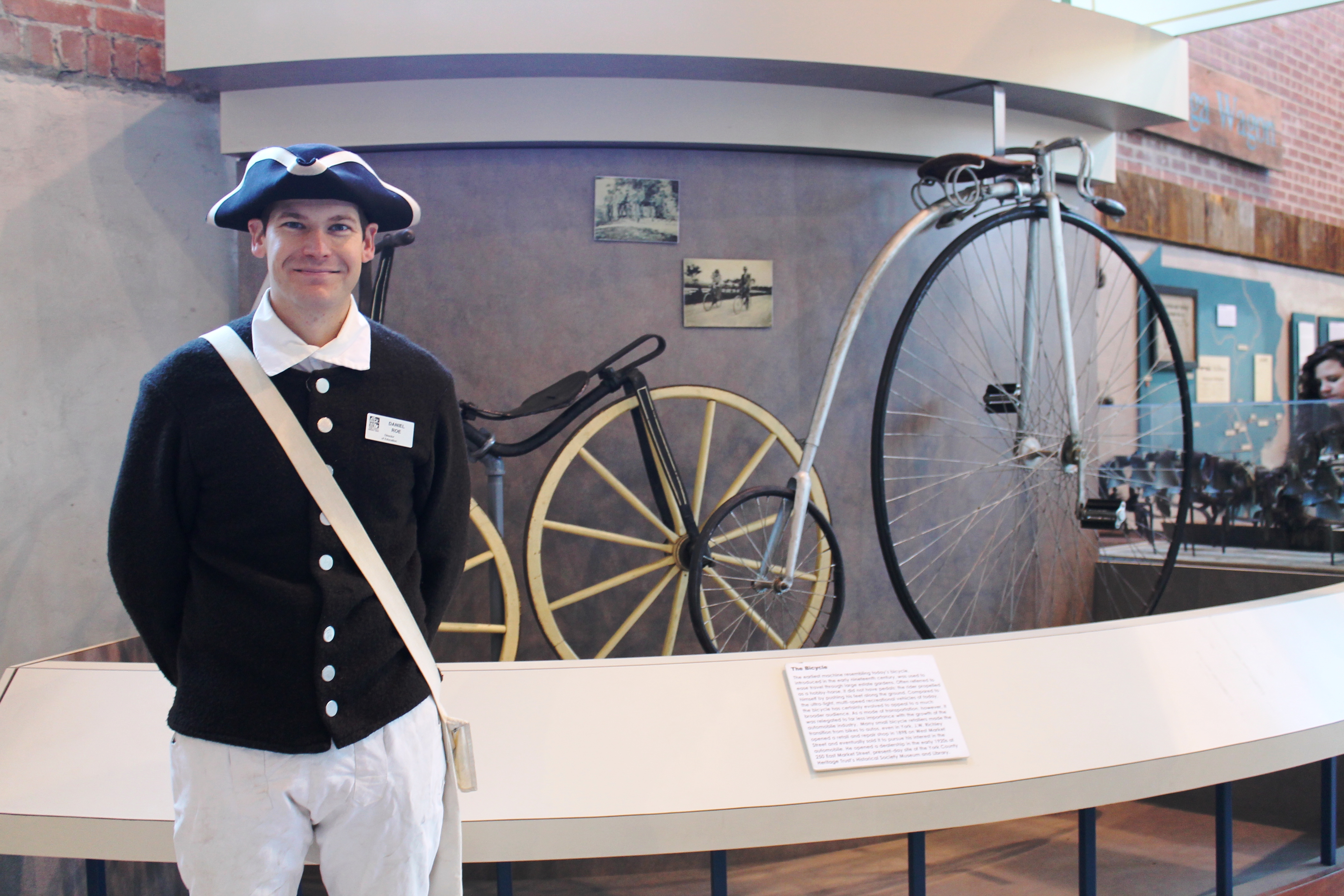
These bikes do not look comfortable.

These bikes do not look comfortable.

Oyster Festival 026 Oyster Festival 027 Oyster Festival 031 Oyster Festival 032 Oyster Festival 034

The kids LOVED this old truck.

The kids LOVED this old truck.

Oyster Festival 038

Pfaltzgraff Pottery

Pfaltzgraff Pottery

Oyster Festival 042 Oyster Festival 043 Oyster Festival 046Oyster Festival 044

Trolley donated by Dover Township

Trolley donated by Dover Township

Oyster Festival 047

American Indian dancing and music

American Indian dancing and music

Oyster Festival 060 Oyster Festival 061 Oyster Festival 064

Frank Little Bear

Frank Little Bear

Oyster Festival 070 Oyster Festival 072 Oyster Festival 075 Oyster Festival 077

Joining in the dancing!

Joining in the dancing!

Oyster Festival 085 Oyster Festival 093

Hawk foot in head dress

Hawk foot in head dress

Oyster Festival 056

Mt Joy Flour

Mt Joy Flour

Oyster Festival 104 Oyster Festival 105

Water wheel for the mill

Water wheel for the mill

Warner Dairy

Warner Dairy

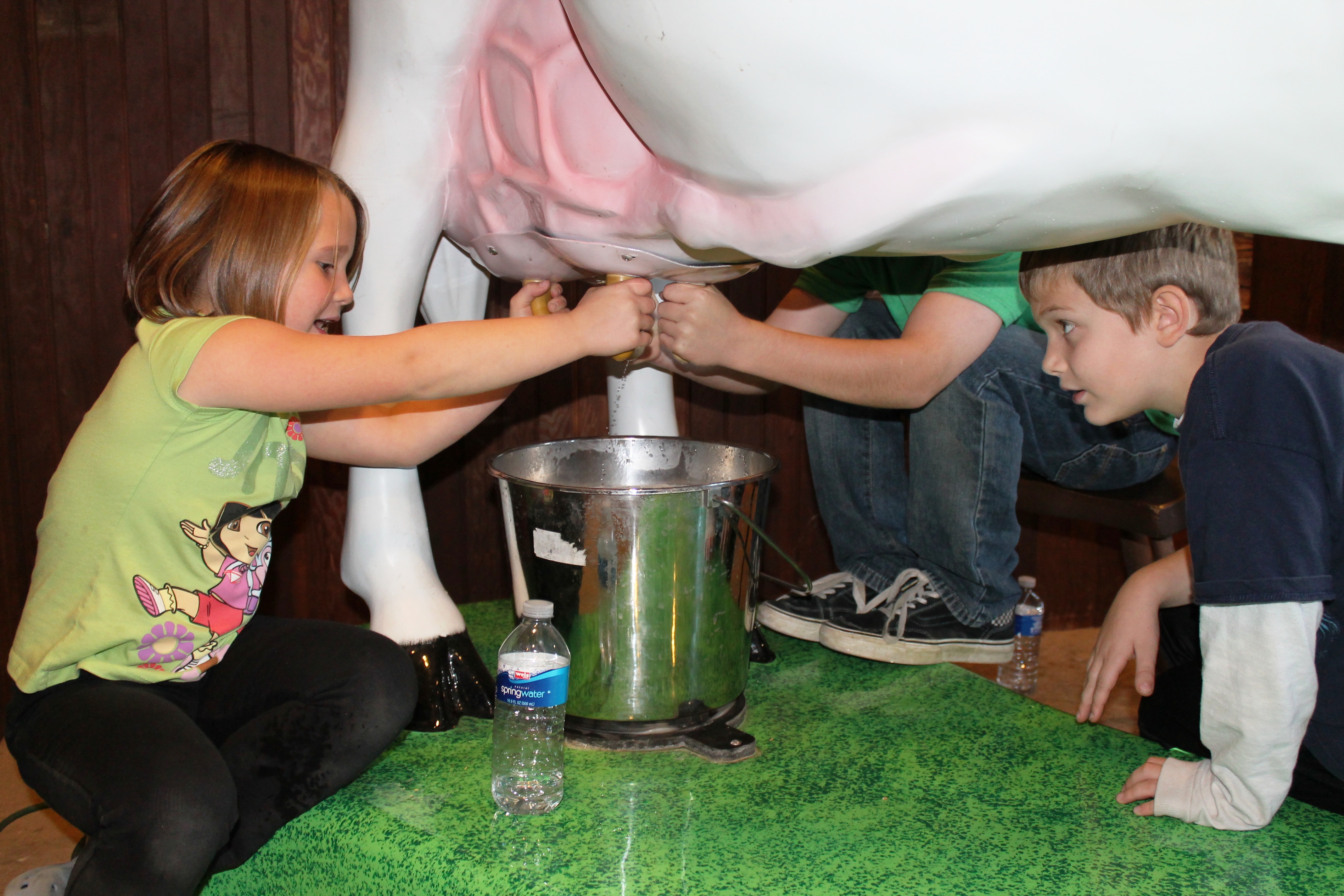
cow milking time!

cow milking time!

Oyster Festival 119

Utz chips

Utz chips

cool cows

cool cows

bizarre painting at the meat grinders

bizarre painting at the meat grinders

Stauffer's Biscuits

Stauffer’s Biscuits

Oyster Festival 128

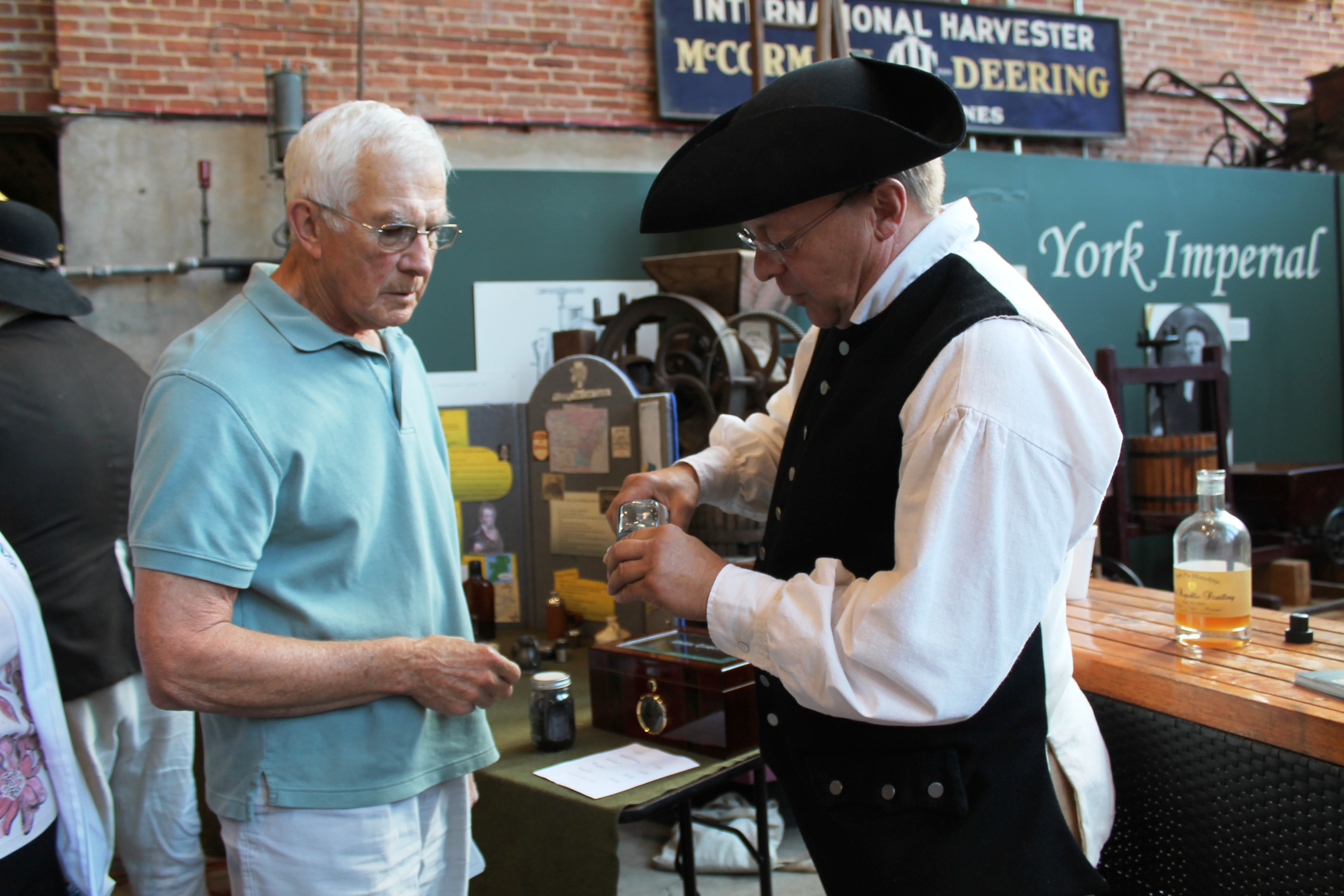
Taste testing!

Taste testing!

Cigar factories were plentiful in York, PA

Cigar factories were plentiful in York, PA

Type set

Type set

York Daily Record print plate

York Daily Record print plate

loose type set

loose type set

vintage printing press

vintage printing press

Oyster Festival 144

hard work but cool print

hard work but cool print

Before cellphones

Before cellphones

Dentist's Supply York PA

Dentist’s Supply York PA

Oyster Festival 148 Oyster Festival 149

In the courtyard

In the courtyard

Oyster Festival 156

Reddy Kilowatt

Reddy Kilowatt

We had a great afternoon and learned a good deal about the agricultural and industrial businesses of York. I had no idea oysters were so popular in York! ~P.

York County Facebook groups remember when – The York Daily Record

Getting the word out about Dover, PA’s Facebook Page!

York County Facebook groups remember when – The York Daily Record.

The passion of one woman’s social concern

Francis Bacon’s Advancement of Learning applied to Margaret Fell’s Women’s Speaking Justified.

Francis Liked Bacon

Francis Liked Bacon

Pattie Crider

WRT 305

Response 15

October 16, 2013


The passion of one woman’s social concern


            Bacon’s ideology was that scientific discourse is a technical treatment of truth and rhetoric links knowledge to social concerns. Bacon stated that applying reason to imagination would be successful to move the will of the hearer and with that ability involved great responsibility. Fell, an outspoken woman of her time, believed that she was a prophet of God and raised the concern that women were afraid to speak in fear of male retaliation.

As Bacon had stated, bringing the knowledge of social concerns (such as this genuine fear of speaking by women) was important and that the person bringing forth such affection and imagination for the future must be responsible for their actions. The message Fell wished to bring to light (that of women’s rights) was done with great affection as it was important to her specifically.  Her ideas were supported in Bacon’s theory in that those following this strong-minded woman could reason the importance of feminine thought for the future.

Fell was possibly the first to seriously question the rejection of women’s roles in the church. Her affection to this cause was brought forward in their present time and her rhetoric involving Biblical text detailed the roles of woman therein. She passionately stood her ground in support that women not only have the right to speak and be involved but to also be a leader in teaching God’s word. It took a strong woman to speak what would eventually become accepted in the future. It was this passion and reasoning that moved the imagination of other’s will to accept women in the leadership roles they hold in churches today.