At the airport and Cabana Hotel – YCP Hoina 2013

Detail from our first day of travel.  Nothing to exciting yet but we get excited about even the little things….like the fuel pouring out of the wing of our first airplane.  That was fixed and two and a half hours later we were on our way.

At the airport and Cabana Hotel – YCP Hoina 2013. <—click it!

India Bound

Christmas Eve n morning 2013 002

This will be my last post while in the United States!  Hard to believe after six months of patient waiting, I am finally leaving for India.  I’m very excited about the trip and the difference I can make in these children’s lives.  Not just me, but our entire class of 15 that is headed across the world for an International Learning Service course through York College of Pennsylvania.

I am grateful for the support of my family, especially my daughter who was very upset when I originally told her I was leaving the country, but she has since come around and is very happy that I am going to help other children who are much less fortunate than she is.  I explained to her that these children don’t have parents that love and care for them like she does.  She wrote me a song and played and sang it on her new keyboard she got from Santa:

“You are going to India and you will have fun with your friends and teach English to children. And Brian and I will miss you very much and we love you.  And you love Jesus Christ…”  God I love this child!!!

I am also very grateful for the support of my boyfriend, Brian.  Boyfriend just doesn’t seem like a strong enough word to describe him.  I am so in love with this man and will miss him to the point that I imagine it will be painful.  When I get back and we make some final changes in our lives, I know we will get married and stay that way for the rest of our lives.

Lastly, but not least, I am grateful for the support of my family and friends.  I saw my sons, mom, sister, nephew and brother last night, just as Christmas day was wrapping up, and got hugs and kisses from all of them.  My friends have already been messaging me and calling with well wishes and warning me not to drink the water….like I don’t know that. LOL

Well, my bestie is here to house sit for me.  Bless you Trisha!  I love you to pieces and I know my dog is in good hands!  And happy birthday in two days!!!

I have 6 magazines and one Clive Barker book, his first book, Imajica.  If you never heard of this book, it’s 854 pages.  LOL

Love and miss all of you on my blog and Facebook!

Here is the website where I’ll be teaching.  http://www.hoina.org/

The blogsite for my class.  http://yorkcollegehoina2013.weebly.com/

And if I can, I will post on Facebook and my blog!!

Love you!

Pattie

Hanging at Rutter’s but thinking about India

Now that my life is without internet service, I find myself hanging out at Rutter’s using their free Wifi.  It’s amazing how many people come to Rutter’s that I know…I saw my friend Shae the other day, my best girl Trisha and her granddaughter Keira and even the mayor of Dover, Rick Pope.  Rutter’s is a popular place!

So I’m counting down the days until I leave for India.  I realize most of you all are counting down the days until Christmas.  I’m not that excited about Christmas mainly because: 1. My dad has a wild hair up his ass again and I’m not permitted to go to see my mom   2. I’m broke.

About this shunning, my mom is TORN UP because her and I are tight.  John has the biggest mouth, one that runs like a duck’s ass and he can’t seem to keep himself out of my life.  He loves to call my father and tell him about my personal life, none of which is any business of my father or John and Dale is just a tool who won’t see how he’s getting played by “John the Man” or Heather until he is no longer needed for entertainment purposes…seriously, John doesn’t have any real friends and neither does Dale. (Oh, and LaDonna doesn’t count since she’s getting paid to be there.)  I’m not trying to be mean, just stating the truth.  Both men were always amazed by the number of friends I have.  Hmmm…maybe because I’m a nice person?!  Nothing will make me happier then that day in March 2014 when I’m not longer married to that ass clown.  Well, I imagine I will find the day that makes me happier.  The day I marry Brian will make me happier, but first the ass clown has to exit my marital status.

India will be the furthest I’ve traveled in the world.  A whole new land for me to explore.  I’ve promised Brian I will take as few chances as possible while I’m there.  I tend to enjoy the thrill of danger but I don’t have a death wish.  It’s more like I don’t think God is going to take me off the earth anytime soon.  I promise if I ride a motorcycle in India, I’ll wear a helmet.  HAHAHAHA!  That’s more than I do in Pennsylvania!

Remember, beside my personal blog that you’re reading now you can keep track of all 13 York College students and our professor Dave Fyfe at this blogsite.

http://yorkcollegehoina2013.weebly.com/

Guess I need to start packing soon!

~P.


Spartapalooza 2013

Every year at York College of Pennsylvania the students, faculty and families gather for the annual Spartapalooza festival and this year was no different.

There was plenty of food and fun, music and madness to go around.

The ever popular cardboard boat regatta was a crowd favorite and judged by York College’s very own president, Dr. G-S.  The new school mascot, The Screamer, was up to no good as he tried to take a dip in the pool. His handler had his work cut out for him!

The bounce houses, football throwing, face painting, slicing watermelons with playing cards and riding the mechanical bulls was a blast for everyone as we gathered stamps in our class passport to try for amazing prizes in a raffle at the end of the festival.

If you weren’t there, you missed out!

Click the first thumbnail to open the photo gallery.

Sleep deprived

My lids are heavy like weights to bare

Force them upwards and continue to stare

I take the sights in, visually greedy I admit

Too much at stake to just quit

Give me that feeling, I want it for keeps

Even if it means giving up sleep.


~P.

What the doctor said

When applying for scholarships,  the applicant usually needs to have letters of recommendation from two professors to accompany the application.

Here’s what one of my professor’s had to say.

Dear Colleagues:
I am happy to recommend Pattie Crider for the Sigma Tau Delta Senior Scholarship.
Pattie is a Professional Writing major and Religious Studies minor who maintains an excellent 3.47 GPA. She is very active in the major and in the English & Humanities Department as a whole. I speak for my colleagues as well as myself when I say that Pattie is a student whom we look forward to having in class and whose company we enjoy immensely during office hours. She is smart, curious, and hard working. Add to that potent academic combination Pattie’s great people skills and wicked sense of humor, and I imagine that you can understand why I think of her so highly.
Pattie has also been active in Department-related extracurricular activities. I can speak most confidently on Pattie’s contributions to The Spartan. Pattie has been a stalwart member of the staff for several years, and I am grateful for her devotion to this important College institution. She has written numerous article that have been published, and she’s done all of this work for no pay or academic credit. Indeed, it’s difficult to find students who will really commit themselves to The Spartan given its lack of tangible reward. Pattie’s service, then, is all the more admirable.
Pattie Crider would be a worthy recipient of the Sigma Tau Delta Senior Scholarship, and I ask that you carefully consider her application. In the meantime, if I can answer any questions about Pattie, please don’t hesitate to contact me.

See…they love me…they really love me!  LOL ~P.

Esther gets beaten on Halloween

I'mir R. Williams & Esther Schmucker

I’mir R. Williams & Esther Schmucker

You would think after filing 3 petitions from abuse orders against I’mir R. Williams (Mirkat), Esther would have gone through with one of them.

I’m not placing blame on the victim here because I understand how it feels to be in love with someone and just not know what to do when that person treats you like shit.

I hope now that Mirkat has gone so far as to mess up her face, breaking her teeth and I’m sure crushing her spirit, this should be a HUGE clue.  If a man threatens you…says he is going to chop you into pieces or as I was told, “they’ll never find your body”, believe it and get the hell away from him as soon as possible.

Also, since this loser rapper Mirkat is on the lam…if anyone knows where he is, report him to the police!!!

And Esther…since I know you read my blog, I never had anything against you personally.  It’s all about writing what people are interested in reading. So block me or don’t block me on Twitter, I’m still going to write about the Amish Mafia.

It’s a shame the Amish Mafia isn’t real because Levi and his gang need to put a hurting on this loser.

http://www.pennlive.com/midstate/index.ssf/2013/11/amish_mafia_star_esther_beaten.html

Douglass: An escaped slave

This post is about Frederick Douglass, who lived from 1818-1895 and escaped from his owners in 1838.  Douglass gave his first speech against slavery in 1841 to a mixed crowd of whites and blacks.

The question posed by my professor for a mini essay was: “What were the primary rhetorical obstacles for African Americans when they worked alongside white abolitionists?”

Equal Rights?

            I found it ironic that the white abolitionists were all about rallying for the black race as long as the people they were rallying for didn’t get more attention than the white folks or take jobs the white folks wanted. That was pretty ignorant in my humble opinion, and I don’t mean ignorant as uninformed, I mean the other ignorant.

Douglass had a wife and five kids to support, but when it came down to him getting a job on the docks as a caulker; the white folks objected to him being hired. Now maybe this could slide by as the people he was completing with for a job might not have necessarily been white abolitionists, but once he began traveling with the Garrisonian abolitionists, I would have thought this racism would have ceased. I was wrong.

Douglass traveled all over speaking against slavery but apparently he was used more as a prop than a speaker. The white speakers wanted to do the talking and just parade Douglass out on stage to show the audience his scars from the vicious beatings he was given at the hands of his white owners. As if that wasn’t insulting enough, as Douglass developed his voice and made use of rhetorical tones, his white friends believed he was destroying his credibility as a slave. I suppose the more he sounded like the white folks, educated with no Southern draw, the less likely anyone would believe he had been a slave. They even doubted that he had in fact written his own speeches. If he hadn’t had the scars, would they have believed anything?

Fact: There are times that my own race disgusts me, historically and presently.

Don’t just preach it, Live it

The Rhetorical Appeals and Delivery in Reaching a Community of God’s People

BW-WeAreGodsPeople

            Nothing moves me quite like a good sermon. I want to become emotionally involved in what the preacher is saying and have the Bible verses stated so I can look them up while the sermon is being delivered. I expect the preacher to approach the sermon with logic and have it apply to my own life.  The words should roll off the preachers tongue with conviction and be genuine in the attempt to move my heart to save my soul. It is easier to accept my sinful nature when the preacher acknowledges his or her own sinfulness and asks God to be forgiven along with the rest of us. Preachers must create a community within their congregation that makes people feel welcome, regardless of their past. To understand the necessary appeals and the delivery that should be used to make this possible, we will delve into three journal articles that focus on the goals of preaching to God’s people.

First we will explore how the journal articles define God’s people. Charney stated that God’s people are those who have been abandoned (262) or are humiliated, deprived, and down cast (263). Charney also describes God’s people as the lowliest of individuals that are angry and traumatized (265). Souders describes God’s people as those who realize their natural, sinful human condition (324) while Manolescu quotes Campbell in describing them as “the inferior ranks of people” (162). What can be taken from all three journals is that God’s people are damaged goods. All humans are in dire need of a preacher to save them from themselves in order to one day ascend to Heaven rather than be delivered straight to Hell as an unsaved soul. The authors are straight-forward with the description of the human condition that casts all as unworthy sinners, but offers the opportunity for forgiveness.

Next are the rhetorical appeals and delivery style that preachers must use to properly persuade the damaged humans to everlasting life. Charney states the desire is to foster cohesiveness both socially and culturally within a congregation through the use of Psalms (264). The Psalms, either sung or spoken in verse, should be done as a public declaration, as well in private (248). The act of declaring ones faith in public will allow others the chance to humiliate the speaker, but holding back a declaration of praise or affirmation of faith would be a sin. Manolescu stated that Campbell believed an emotional appeal should be used to move a congregation (163, 165) in a gentle, persuasive manner rather than a zealous manner delivered in the grand style (165-66). An overly zealous delivery may be found offensive to a congregation and should be avoided so not to alienate or strike fear into the listeners. Rather a logical approach with reason and genuine passion will fulfill the rhetorical appeal. Souders is in agreement with Manolescu that the influence and beliefs of the preacher–the logos–should be delivered in the plain style (321) while using reason (332) and natural science (320) to help the congregation understand the meaning of the sermon. Also significant, Souders points out that Beecher stated it is the job of the preacher to develop true Christians by inspiring, nurturing, and guiding them to Divine Understanding (336). This truth will be achieved through being a “good man” as defined by Quintilian in that the preacher had better be practicing what he preaches. This, in my opinion, is the most difficult task of a preacher–to lead by example–as even preachers are sinners by nature.

Lastly, are the goals of a preacher as presented in the journal articles. In Charney’s article, the Psalms are an example of how people, preachers included, should sing the praises of God publicly (260) as a celebration of God’s sacrifice on human’s behalf. A pastor not only helps a congregation reaffirm their faith, but reaffirms their own in doing so. Manolescu writes that Campbell advocates the use of certain doctrines in order to promote the correctness of a congregation and to convert non-believers by a means of passion that is communicated from the speaker to the listeners to move their will (168, 174). Souders article on Beecher perhaps explains the goals of preaching the best. A preacher must relate the sermons to the lives of the congregation to be create a fundamental transformation of the listeners (318). Beecher disposed of the past methods of preaching to the elite, the educated, the obedient and those of authority (323) and instead taught all how to model their life after Christ allowing his congregation to feel loved and included. Beecher even went as far as to refuse to preach from the pulpit (324) in order to make his presence at the same level of his congregation. I personally have never witnessed such a thing but find that admirable that he wants people to see him as an equal instead of above those who are listening. Beecher strived for a fundamental transformation of his listeners based on truth through pathos, rather than the ethos of his learned knowledge. He wished to “make religion attractive by the goodness that men see in you” and took this approach to heart by focusing his sermons on the audience rather than the rules (325). In doing this Beecher’s objective was to “lift the lives of listeners from the mundane and normal, up to the divine” (327). This is what a congregation needs from their preacher, to feel inspired to release the stress of their daily lives by turning their troubles over to God. It is then that God is given control and the ability to relieve them of the problems that bring their lives down.

The three journal articles I analyzed all focused on the importance of a preacher in creating an inviting, warm atmosphere for their community. A preacher must realize that God’s people are not perfect and never will be, and in that, they must acknowledge their own sinfulness in order for their listeners to be accepting of their words. No one person is better than another and a congregation will turn away from a preacher who teaches otherwise. Emotional appeals are important to the listeners as they bridge a gap that may be otherwise be missing in a person’s life. Everyone, at some point, has felt humiliated or deprived, angry or depressed, so the importance of preaching and teaching to reach those people and saving their souls is the highest of all goals of a preacher because if they fail to do so, to save that person from their sinful nature, the preacher also fails in their commitment to save God’s people.

Works Cited

Charney, Davida H. “Performativity and Persuasion in the Hebrew Book of Psalms: A Rhetorical Analysis of Psalms 116 and 22.” Rhetoric Society Quarterly. June 2010: 247-268. Print.

Manolescu, Beth I. “Religious Reasons for Campbell’s View of Emotional Appeals in Philosophy   of Rhetoric.” Rhetoric Society Quarterly. Apr. 2007: 159-180. Print.

Souders, Michael. “Truthing it in Love”: Henry Ward Beecher’s Homiletic Theories of Truth,        Beauty, Love, and the Christian Faith.” Rhetoric Society Quarterly. Sept. 2011: 316-339.        Print.

Tainted by Birth: India’s Caste System

Pattie Crider

Professor Waddell

WRT 225

October 30, 2013

Tainted by Birth: India’s Caste System

            Americans take for granted their rights as citizens, but not all countries give their citizens such rights through a democratic system or a written constitution. One such country, India, has grouped the Indian citizens into castes since ancient times based on the beliefs of the Hinduism religion. The word “caste” is taken from the Portuguese word, “casta” which means “race” and all citizens are born into one of multiple caste groups. (Shouler, 157) These castes will determine the quality of life for an Indian person, who they may marry and will mark them permanently until their earthly walk comes to an end. The caste system consists of four named groups and one group which had no formal name but the people are referred to as “untouchables” placing them at the very bottom of civilization. The four castes were based on parts of the body, the Brahmins (mouth), Kshatriyas (arms), Vaishyas (thighs), and Sudras (feet). (SarDesai, 105) A brief explanation of these groups will follow before moving on to the caste referred to as untouchable.

India caste system

            The Brahmin caste was the “dominant group, the very model of the Indian social hierarchy” (Deliege, 32) and the smallest of all in caste size. This group consisted of priests and academics, and the Verdic word brahman means prayer, which would be expressed through the mouth. The Kshatriya caste consisted of the warriors and kings and their responsibility was to protect and rule by use of their arms. This group wears sacred threads indicating they have been born twice, once physically and the second spiritually. (Shouler, 154) The Kshatriya caste and Brahmin caste often worked closely together in order to remain in control of the social order. The small size of the two castes would appear to put them in jeopardy, but the long tradition of Indian hierarchy and religion retains their high-seated positions.

The third caste, named Vaishyas, is made up of merchants or agriculturalists. (Shouler, 155) This group is also referred to as the common people and mainly comprised of farmers. Their responsibility is to ensure there is food for the community and they are an important part of the Indian economy. The physical nature of their work reflects back to their depicted body part, the thighs. The last named caste of India, is the Shudras, portrayed as the feet. (Moraes, 7) This group was considered the lowest of all social groups because they are servants. They perform personal services for the castes above them and those services range from barbers, launderers, cooks, maids, gardeners, drivers and the like. (Kolanad, 157) The only tasks that did not fall to the Shudras were those that were found to be so undignified, it could only be performed by that of an untouchable. To be included in any one of the four castes places that person into an acceptable position within the Indian nation, all others fall into that of an untouchable, the lowest in society and not even considered to be part of humankind.

The Untouchables: Deemed Inhuman

            The untouchables fall below the Shudra caste and were not given a formal caste name. These people were often foreigners, lawbreakers, people from isolated tribes and people stricken by disease.  While the caste system was abolished after the fall of British rule in 1947, (Shouler, 156) and outlawed in the Indian Constitution in 1950, (Kolanad, 39) the inhumane treatment of those people continues today. The untouchables must live by a strict rules implemented by all castes above them, as well as by other untouchables. The untouchables have been given many names over time and also fall into sub-castes in India. There are a substantial number of people that fall into what is presently called the Dalits.

There are approximately 150 million Dalits in India today. (Dowling, np) This number may be low because it is difficult in gathering accurate numbers when the citizens are embarrassed to reveal their caste name. These people are excluded from living in the villages, must dress in rags, eat only scraps and are degraded at all times.  (Deliege, 12) The term Dalit is a euphemism for untouchable and the most common name used. When asked by Robert Deliege what caste an Indian is from, they would often refuse to give their caste name or instead replied, “What does it matter? After all we are human beings like you.” (14) While centuries have passed since the caste system was placed, the treatment of untouchables is still appalling to those of the West. In an attempt to be politically correct, three names have become widely used in place of the label untouchable. Those names are Harijan, Scheduled Caste and Dalits. Gandhi called the untouchables Harijans (blessed through suffering) and worked to see these people treated more humanely. In the past the untouchables deemed to have problems following Indian law were cruelly punished by being fed to wild dogs or burned to death on a “red hot iron bed.” (Flood 59, 60) Gandhi, who only desired a peaceful means of demonstrations in life found this treatment of human-beings unacceptable. In time, the untouchables began referring to themselves, when forced to give a caste name, as being a Dalit, meaning the oppressed people.  Outsiders, generally scholars, choose to identify this group of Indians as Scheduled Caste.

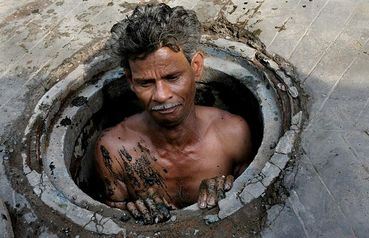
The untouchables can be found in any area of India.  It is not limited to one region or state. Every village has untouchables who must do the “dirty work” that no other caste is held responsible in completing.  These duties always have some tie to filth. (Deliege, 25) The untouchables must use buckets to clean out the toilets, remove waste and dead animals along the streets, clean the bodies of the dead, skin and tan the hides of animals, ward off evil spirits and provide menial tasks considered unclean for the higher castes of the community. This work is always hired out to untouchables to ensure the lives of India’s communities continue to run smoothly. The Dalits were also expected to follow the “unwritten rules” pertaining to their class of people. Dalits could not eat with members of other castes and they must have separate glasses for drinking and utensils for eating; (Moraes, 28) these examples of the expectations nearly make sense in a hygienic matter. Other laws, such as separate burial grounds, segregated classrooms and sub-standard wages (Shouler, 152) are rules enforced strictly to humiliate this class of people. Regardless of the modern era India has entered and the separation of religion and state, the caste traditions are still carried on by Indian citizens.

untouchable

            The question today is: have the changes in the law that took place in 1950 made any changes in the lives of those deemed untouchable? Zinkin states, “Untouchability has disappeared because the Constitution makes the enforcement of it an offence. Everyone pretends that caste no longer matters because India is modern.” (177) This may be true in so much that the government no longer recognizes an organized caste system but the reality is the people of India continue the hierarchy tradition to present day. There are millions of untouchables in castes and sub-castes that are given names to cause insult and humiliation. Deliege listed only a few of those caste names, some being, Mala, Nadar, Pulayan, Paraiyar, Chamars, Bhangis and Mahars (21) that continue to lower an Indian to what is considered a non-human. It may seem as though India has not made much progress in freeing the people from being called non-human and living a life of degradation involving the filth of the community, but recently there has been relief as the Indian people have taken a Democratic approach to electing leaders.

Emerging from the Filth

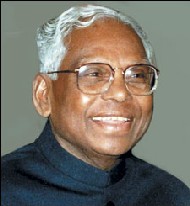
            Gandhi had high hopes for the Dalits and is quoted as stating, “The country will attain the real freedom only on the day a Dalit would become the president of this country.” Gandhi’s life was cut short with his assassination in 1948, but had he lived, he would rejoice that the Indian people elected a Dalit to the presidency. K. R. Narayanan served India as president from 1997 to 2002. (Dowling, np) This was no small victory for the enormous group of oppressed people and since the election of a Dalit to presidency, the lives of the untouchables has improved. Even with the laws passed against discrimination, those who are caste as Dalits remain low in the social order today and those fortunate enough to be born into the higher castes remain high in the social hierarchy despite the changes within India.  While being born into a caste may seem to seal the fate of an Indian, there is the possibility of moving up in the caste system. “One’s birth determined one’s class, which could be altered only with rebirth, depending on one’s karma.” (SarDesai, 104) Based on this spiritual rebirth, an Indian may move up in the caste system as this person has pleased the gods and found worthy to transcend to a higher position in the community. This has been achieved by K. R. Narayanan and numerous other Indian citizens, thus deserving mention in this essay.

K.R.Narayanan

K.R.Narayanan

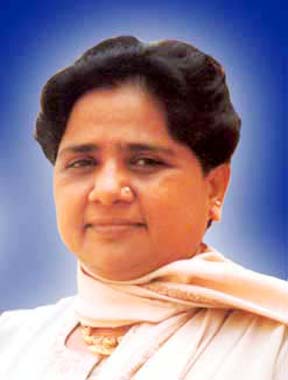
Two former Dalits have risen from humble beginnings and shed the caste they were born into. Mayavati has overcome not only being born an untouchable, but is also a woman. She is the country’s most famous lower caste member, according to author Sreedhar Pillai. (np) This year, Mayavati was voted into a four year position of chief minister of Uttar Pradesh, the most populated state of India. She has become an icon for the Dalits that continue to remain in a state of degradation and aspires to one day be the Prime Minister of India. These are lofty goals for a female Dalit, but she has proven her worth and her attaining her stated goal is within the realm of possibility.

Mayawati

Mayawati

            A second Dalit that has risen above his birth caste is Hari Kishan Pippal. Pippal stated in an interview that “as far as he could remember, people told him he was unclean, with a filthiness that had tainted his family for centuries. Teachers forced him to sit apart from other students and employers did not bother to pay him.” (AP, np) Pippal was not expected to have higher goals in life beyond that his Dalit father, a stone cobbler. Refusing to be passed off as inhuman, Pippal pushed himself to strive for much more in life and despite those who wished to suppress him, at 60 years old, he has made remarkable achievements. He is the owner of a hospital, a shoe factory, a car dealership and a publishing company in India and proof that in this day and age, a person can escape the caste they are born into.

Hari Kishan Pippal

Hari Kishan Pippal

The people who have broken out of the cycle of the caste system are rare and unique. Unfortunately, even with the changes in Indian government, the caste system is still a reality that Indian citizens must learn to live with and adapt to. If nothing else, the inspirational stories of these three people who have loosened the chains that bound them to the caste they were born into give other Dalits the hope for a brighter future. Gandhi predicted the rise of the Dalits out of the filth they have been held to for centuries and while it may take more centuries to end the persecution of these Indians, there is hope–if nothing else–and that is a start.

Works Cited

Associated Press. I was one of India unclean Dalits, now I am a millionaire. The National News. 2011. Web. 28 Oct. 2013.

Daniel, Ahron. The Caste System in Modern India. tripod.com/modernindia. 1999. Web. 27 Oct. 2013.

Deliege, Robert. The Untouchables of India. UK: Berg Publishers, 1999. Print.

Dowling, Mike. “The Caste System at mrdowling.com”. http://www.mrdowling.com. 2013. Web. 27 Oct. 2013.

Flood, Gavin. An Introduction to Hinduism. UK: Cambridge University Press, 1996. Print.

Kolanad, Gitanjali. Culture Shock! India: A Guide to Customs and Etiquette. Oregon: Graphic Arts Center Publishing Company. 1994. Print.

Moraes, Frank. India Today. New York: The Macmillian Company, 1960. Print.

Pillai, Sreedhar. A Dalit Prime Minister. Ibnlive.in.com. 2013. Web. 28 Oct. 2013.

SarDesai, D.R. India The Definitive History. Colorado: Westview Press, 2007. Print.

Shoulder, Kenneth., Anthony, Susai. The Everything Hinduism Book. Massachusetts: F&W Media, 2009. Print.  

Zinkin, Taya. Challenges in India. London: Chatto and Windus Ltd., 1966. Print.