India~ Day 2

It’s 9PM on Sunday and we are on a train to Varanasi, India.  My classmates are tripping about the train ride because it’s a bit sketchy.  There’s nothing secure what-so-ever and they are young and concerned which I get. I feel kinda like a momma hen, reassuring them they will be fine. I think now that we are all settled in they will feel better.

I have a strong stomach but let me tell you, that train station was worse than any farm I’ve ever spent time on.  Men of all ages just peed down on the tracks like it was a huge urinal.  I realize the toilets on the train go right onto the tracks but it was strange to witness grown men piss in public with no concern of the police walking around the platform.

Speaking of which, the police must not enforce anything in India. We were waiting for our bus to pick us up and I watched (and photographed) a man roll a joint and smoke it.  The police rolled up and one hopped out of the minivan. He walked over to the tokin’ Indian and waved the vehicle around him to park.  I’m glad they didn’t arrest him for smoking that joint, or run him over.  He was all huddled up under a blanket and nearly passed for a speed bump.

I’m getting ready to hit the shit hole. There really is no other way to describe it and from what I’m told, there is no door. Guess any Indian hanging out by the tracks might get a glimpse of my white ass. Hope they have their cell phone ready. We are extremely popular here and regularly asked to pose for pictures with citizens or even holding their babies. Maybe it’s good luck to get a white person to hold your baby and take his/her photo.

That happened at the site of Gandhi’s assassination.  This Indian couple with their four children ages roughly 9 months to maybe 8 years old was beyond tickled when Gabby agreed to hold their baby and pose for a picture. Gabby was also asked by a school boy, maybe 12 years old, to pose with him while his friend took the photo.  She agreed and afterwards Fyfe told her they like to photo shop naked bodies onto the heads of white women.  Strangely, we found that amusing rather than offensive.

Caitlin and I just hit the head. I handed her my camera to make a permanent record of me doing the squat over the hole.  There are slightly raised platforms in the shape of shoe prints to indicate where to put your feet.  Well, shoes, no one would go in that “bathroom” without shoes. I took a napkin from Starbucks to wipe with.  Who knew all those napkins I’ve been saving up would come in so handy?

I realize I’m jumping around about day two in India. I blame it on the lack of sleep and the inability to focus in a linear fashion. We had a very late lunch, around 2 pm, in a very fancy restaurant. None of us were dressed appropriately but when you have the money I suppose it doesn’t matter what clothes you have on. I’ve been super lucky with eating the food. Nothing has made me sick and I’ve liked the taste of everything.  At breakfast I ate these little potato cakes and donut shaped cakes dipped in an onion and pepper sauce. I was asked if I wanted an omelet and I said, “Yes please.” There was no cheese in the omelet but there were onions, peppers and Indian spices. I had two pieces of burnt toast (my fault for not watching the toaster) with butter and a mixed jelly that had the taste of vodka. I found it all delicious.

The mosque we visited today was impressive.  The largest mosque in India. I paid the 300 rupees to take my camera in. My souveniers are my photos so if I have to pay to take photos, I will. No one else coughed up the cash but I said I would share my pictures cause I’m nice like that. Karma you know…I am in the right country to be throwing out her name. If only I could get her to visit a few people still back in the US…

We took a rickshaw ride and let me tell you that were more dangerous than hold the cobras yesterday. My driver was a skinny dude and I had Fyfe with me so “puffer” as he smoked while he tried to haul my professor and I around New Delhi had his work cut out for him. Let’s just say I got some great photos and videos as he hauled our asses around at break-neck speed.  At one point we passed all the other drivers as I stuck my head out and yelled, “We kick your slow asses!” much to our driver’s amusement. The one thing that sticks out isn’t the close calls as he whipped in and out of traffic, but the electrical cords zipped tied together like octopi with juiced up legs waiting to explode into flames. Amazingly, our guide said there has never been an electrical fire. Hell, I’ve had several and they were just from one toaster and a hand-held mixer.

The market today was interesting to say the least. As tourists, we are walking targets and Indians are seriously aggressive when it comes to selling their wares. And the street urchins…forget about it, they will sell their souls to make a sale. Well, basically their parents will sell their children’s souls cause their fat mother’s are sitting along the street with babies while the children run around with beaded necklaces and cheap ball point pens hawking them to food for their mother. I would say because the baby needs a new pair of shoes, but the baby was naked sans a sweater. I suppose that cuts down on diapering costs…forget about the shoes.

We ate at the McDonald’s in New Delhi. McDonald’s here is different in that there are no beef products. Cows are sacred and McD’s doesn’t get a free pass. So there are other options, none that I would recommend. In fact, according to Caitlin, the McAloo Tiki smelled and tasted like BO. I’m sure no that we’ve smelled the fecal tracks of New Dehli, the McAloo Tiki was nearly delightful. I ordered a fish sandwich meal, something I never order in the US so I felt I was actually living large. The sandwich looked tiny on the normal size bun so I guess the US really does make their serving sizes larger. It was ok, I mean, its McDonald’s and not a Big Mac.  How great could it be?

By 7:10 pm our “guy” still hadn’t arrived with the train tickets. We were all excited to be traveling on a train where we could sleep.  Funny how that became terrifying after the train resembled a New York subway car…but worse. Never say things can’t get worse.  They can ALWAYS get worse.

I’m reflecting on my shopping today. I honestly didn’t spend that much money as things are really cheap, especially with the money exchange.  I bought 5 outfits for our time at the orphanage, only to be told I got the wrong type of shirt.  Guess what, it’s going to have to work cause I’m not buying more. I bought some gifts for family (Mom, Suz, Tesla, Brian, Blaine and Matthew) and for my friends. Nothing fancy but I think items they will like. I didn’t tell anyone I’d buy them a gift personally so anything should be a nice surprise.

The kidlings are now following my example and writing in their journals. I’m the only one who brought a laptop so they are writing with a pen and notebook. I brought my smartpen and notebook but haven’t used them so far. My eyes are getting heavy as my sleeping pills are kicking in. I think everyone has come to terms that no one is going to yank their curtain back and rape them. I’m ready for some sleep.

I miss Tesla so much and Brian too. I talked to Tesla early this morning (which was about 9 pm for her) and also skyped with Brian. He is so happy for me to be on this trip but misses me as much as I miss him. I feel bad because I’m super busy but I know time is probably going slow for him. Nothing like absences making the heart grow fonder and I wouldn’t have believed my heart could grow fonder for this man. Mark my word, by the end of 2014, we will be happily married. 😉

It is now 12/30/13 and we just arrived at the hotel in Varanasi and will be going Ganges River later this afternoon.  It’s 11:40 AM here!

~P.

P.S. I ran out of data space on my blog for photos.  I upgraded but the funds are on hold so until they are released, I can’t upload anything.  Talk about frustrating!!
Out and About in India Day One

Day one in India was amazing. It started with a buffet breakfast where I tried everything that wasn’t Western.  I know what Frosted Flakes tastes like, I’ll pass on that. I got a good giggle out of my classmates who gave me the heads up that the cantaloupe tasted a little off.  I gave it a try and then let them know it was mango, not cantaloupe.  🙂

Our tour guide had us on the move.  Seriously, we were never given more than 20 minutes at any one place to investigate by ourselves.  I appreciate that she wants to share her knowledge with us but we can also read the sign posted everywhere in English to understand what the monuments or tombs are all about.  This way we could get more Kodak moments in.  With that thought in mind, I asked if we could start our day tomorrow at 9 am instead of 10 am in hopes of taking more photographs.

At Humayun’s Tomb today we were given the usual 20 minutes and I requested 30 minutes which our professor said was fine.  I ran to the bathroom (paid 10 cents for my professor and I to use) and then roamed about on my own.  I was still 5 minutes late getting back but I got photos no one else did!!  I also witnessed an Indian man peeing in the river but I didn’t photograph that. LOL

We ate lunch at a very popular restaurant that I believe was just outside the city named City, which means “head” because at one time, the city had human heads on poles surrounding it.  Yeah, that piece of history was a bit freaky prior to eating.

One thing that doesn’t get old is watching people drive in this country. I find myself holding my breath for these crazy Indian’s on motorcycles and mopeds!

We went to what used to be the governmental buildings while India was under British control. They are very different in appearance than the historical Indian architecture.  Our guide remarked that she didn’t feel Britain conquered India because when they left, they left behind the beautiful buildings, libraries, museums and so much more than what would have ever been here had Britain not taken control.  I guess she has a pretty good outlook on India’s past.

The culture and architecture is quite amazing. I was fascinated by the huge fountains that changed colors and noticed there was a sign posted in front of them.  I said to my teacher, “I bet that says ‘no swimming'” but he had no idea.  I asked our guide when we passed them on the way back from viewing the stretch of presidential area (that was once the British’s headquarters) and she stopped to read the sign. It said, “Do not enter the water! Danger due to electrical current!” That should keep people out because I know in Philly, PA, “No Swimming” doesn’t mean a damn thing on those fountains.

I fell asleep briefly on the bus. I’m not sure how that was possible since the constant horn blowing is enough to drive me crazy. I can’t stand beeping noises, or dinging of the seat belt warning, or even someone tapping their fingers.  I guess that means I was really tired.  That power nap came in handy. I managed to talk one student into venturing into the market area with me.  We ate chicken fried rice and chicken egg rolls until we thought we’d explode.  Even with her buying a soda, our total bill was 245 rupees which is less than $4 and she had leftovers!

Tomorrow we are going to a mosque, then to the place where Gandhi was assassinated and then catching a train that night to Agra to see the Taj Mahal in the morning.

Check back for more….I can seem to post pictures right now, only one uploaded.  Check my Facebook page if you would like to see more!

Checking out the College and Tomb of Alauddin Khalji built in 1296-1316 AD

Checking out the College and Tomb of Alauddin Khalji built in 1296-1316 AD

Good night all!

~P.

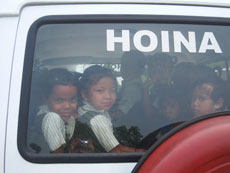
At the airport and Cabana Hotel – YCP Hoina 2013

Detail from our first day of travel.  Nothing to exciting yet but we get excited about even the little things….like the fuel pouring out of the wing of our first airplane.  That was fixed and two and a half hours later we were on our way.

At the airport and Cabana Hotel – YCP Hoina 2013. <—click it!

India Bound

Christmas Eve n morning 2013 002

This will be my last post while in the United States!  Hard to believe after six months of patient waiting, I am finally leaving for India.  I’m very excited about the trip and the difference I can make in these children’s lives.  Not just me, but our entire class of 15 that is headed across the world for an International Learning Service course through York College of Pennsylvania.

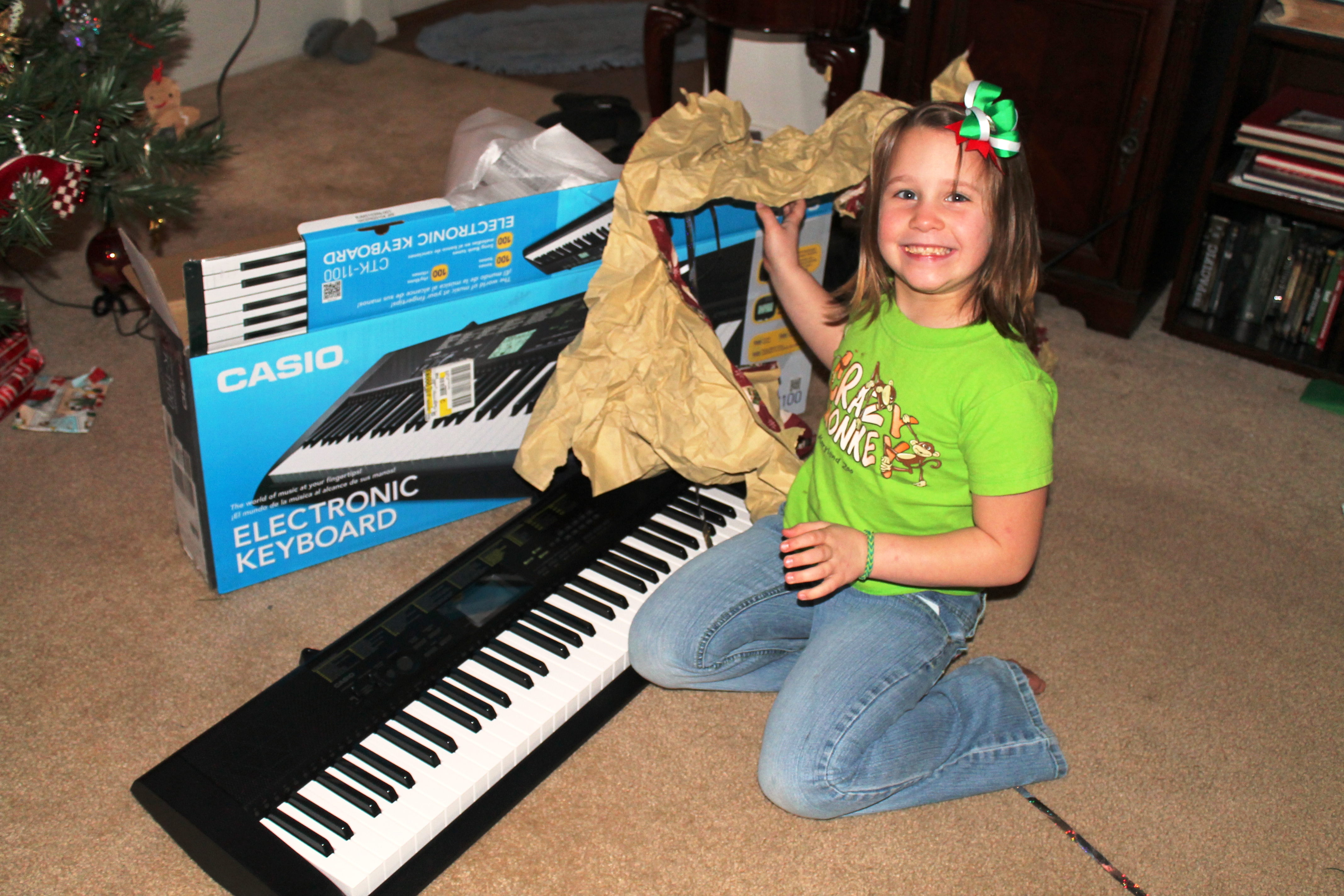
I am grateful for the support of my family, especially my daughter who was very upset when I originally told her I was leaving the country, but she has since come around and is very happy that I am going to help other children who are much less fortunate than she is.  I explained to her that these children don’t have parents that love and care for them like she does.  She wrote me a song and played and sang it on her new keyboard she got from Santa:

“You are going to India and you will have fun with your friends and teach English to children. And Brian and I will miss you very much and we love you.  And you love Jesus Christ…”  God I love this child!!!

I am also very grateful for the support of my boyfriend, Brian.  Boyfriend just doesn’t seem like a strong enough word to describe him.  I am so in love with this man and will miss him to the point that I imagine it will be painful.  When I get back and we make some final changes in our lives, I know we will get married and stay that way for the rest of our lives.

Lastly, but not least, I am grateful for the support of my family and friends.  I saw my sons, mom, sister, nephew and brother last night, just as Christmas day was wrapping up, and got hugs and kisses from all of them.  My friends have already been messaging me and calling with well wishes and warning me not to drink the water….like I don’t know that. LOL

Well, my bestie is here to house sit for me.  Bless you Trisha!  I love you to pieces and I know my dog is in good hands!  And happy birthday in two days!!!

I have 6 magazines and one Clive Barker book, his first book, Imajica.  If you never heard of this book, it’s 854 pages.  LOL

Love and miss all of you on my blog and Facebook!

Here is the website where I’ll be teaching.  http://www.hoina.org/

The blogsite for my class.  http://yorkcollegehoina2013.weebly.com/

And if I can, I will post on Facebook and my blog!!

Love you!

Pattie

Tainted by Birth: India’s Caste System

Pattie Crider

Professor Waddell

WRT 225

October 30, 2013

Tainted by Birth: India’s Caste System

            Americans take for granted their rights as citizens, but not all countries give their citizens such rights through a democratic system or a written constitution. One such country, India, has grouped the Indian citizens into castes since ancient times based on the beliefs of the Hinduism religion. The word “caste” is taken from the Portuguese word, “casta” which means “race” and all citizens are born into one of multiple caste groups. (Shouler, 157) These castes will determine the quality of life for an Indian person, who they may marry and will mark them permanently until their earthly walk comes to an end. The caste system consists of four named groups and one group which had no formal name but the people are referred to as “untouchables” placing them at the very bottom of civilization. The four castes were based on parts of the body, the Brahmins (mouth), Kshatriyas (arms), Vaishyas (thighs), and Sudras (feet). (SarDesai, 105) A brief explanation of these groups will follow before moving on to the caste referred to as untouchable.

India caste system

            The Brahmin caste was the “dominant group, the very model of the Indian social hierarchy” (Deliege, 32) and the smallest of all in caste size. This group consisted of priests and academics, and the Verdic word brahman means prayer, which would be expressed through the mouth. The Kshatriya caste consisted of the warriors and kings and their responsibility was to protect and rule by use of their arms. This group wears sacred threads indicating they have been born twice, once physically and the second spiritually. (Shouler, 154) The Kshatriya caste and Brahmin caste often worked closely together in order to remain in control of the social order. The small size of the two castes would appear to put them in jeopardy, but the long tradition of Indian hierarchy and religion retains their high-seated positions.

The third caste, named Vaishyas, is made up of merchants or agriculturalists. (Shouler, 155) This group is also referred to as the common people and mainly comprised of farmers. Their responsibility is to ensure there is food for the community and they are an important part of the Indian economy. The physical nature of their work reflects back to their depicted body part, the thighs. The last named caste of India, is the Shudras, portrayed as the feet. (Moraes, 7) This group was considered the lowest of all social groups because they are servants. They perform personal services for the castes above them and those services range from barbers, launderers, cooks, maids, gardeners, drivers and the like. (Kolanad, 157) The only tasks that did not fall to the Shudras were those that were found to be so undignified, it could only be performed by that of an untouchable. To be included in any one of the four castes places that person into an acceptable position within the Indian nation, all others fall into that of an untouchable, the lowest in society and not even considered to be part of humankind.

The Untouchables: Deemed Inhuman

            The untouchables fall below the Shudra caste and were not given a formal caste name. These people were often foreigners, lawbreakers, people from isolated tribes and people stricken by disease.  While the caste system was abolished after the fall of British rule in 1947, (Shouler, 156) and outlawed in the Indian Constitution in 1950, (Kolanad, 39) the inhumane treatment of those people continues today. The untouchables must live by a strict rules implemented by all castes above them, as well as by other untouchables. The untouchables have been given many names over time and also fall into sub-castes in India. There are a substantial number of people that fall into what is presently called the Dalits.

There are approximately 150 million Dalits in India today. (Dowling, np) This number may be low because it is difficult in gathering accurate numbers when the citizens are embarrassed to reveal their caste name. These people are excluded from living in the villages, must dress in rags, eat only scraps and are degraded at all times.  (Deliege, 12) The term Dalit is a euphemism for untouchable and the most common name used. When asked by Robert Deliege what caste an Indian is from, they would often refuse to give their caste name or instead replied, “What does it matter? After all we are human beings like you.” (14) While centuries have passed since the caste system was placed, the treatment of untouchables is still appalling to those of the West. In an attempt to be politically correct, three names have become widely used in place of the label untouchable. Those names are Harijan, Scheduled Caste and Dalits. Gandhi called the untouchables Harijans (blessed through suffering) and worked to see these people treated more humanely. In the past the untouchables deemed to have problems following Indian law were cruelly punished by being fed to wild dogs or burned to death on a “red hot iron bed.” (Flood 59, 60) Gandhi, who only desired a peaceful means of demonstrations in life found this treatment of human-beings unacceptable. In time, the untouchables began referring to themselves, when forced to give a caste name, as being a Dalit, meaning the oppressed people.  Outsiders, generally scholars, choose to identify this group of Indians as Scheduled Caste.

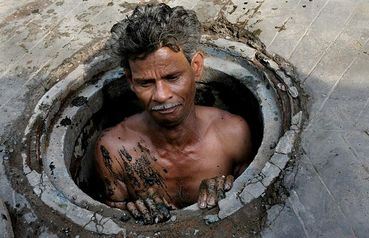
The untouchables can be found in any area of India.  It is not limited to one region or state. Every village has untouchables who must do the “dirty work” that no other caste is held responsible in completing.  These duties always have some tie to filth. (Deliege, 25) The untouchables must use buckets to clean out the toilets, remove waste and dead animals along the streets, clean the bodies of the dead, skin and tan the hides of animals, ward off evil spirits and provide menial tasks considered unclean for the higher castes of the community. This work is always hired out to untouchables to ensure the lives of India’s communities continue to run smoothly. The Dalits were also expected to follow the “unwritten rules” pertaining to their class of people. Dalits could not eat with members of other castes and they must have separate glasses for drinking and utensils for eating; (Moraes, 28) these examples of the expectations nearly make sense in a hygienic matter. Other laws, such as separate burial grounds, segregated classrooms and sub-standard wages (Shouler, 152) are rules enforced strictly to humiliate this class of people. Regardless of the modern era India has entered and the separation of religion and state, the caste traditions are still carried on by Indian citizens.

untouchable

            The question today is: have the changes in the law that took place in 1950 made any changes in the lives of those deemed untouchable? Zinkin states, “Untouchability has disappeared because the Constitution makes the enforcement of it an offence. Everyone pretends that caste no longer matters because India is modern.” (177) This may be true in so much that the government no longer recognizes an organized caste system but the reality is the people of India continue the hierarchy tradition to present day. There are millions of untouchables in castes and sub-castes that are given names to cause insult and humiliation. Deliege listed only a few of those caste names, some being, Mala, Nadar, Pulayan, Paraiyar, Chamars, Bhangis and Mahars (21) that continue to lower an Indian to what is considered a non-human. It may seem as though India has not made much progress in freeing the people from being called non-human and living a life of degradation involving the filth of the community, but recently there has been relief as the Indian people have taken a Democratic approach to electing leaders.

Emerging from the Filth

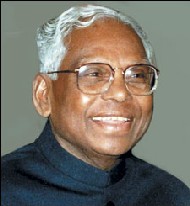
            Gandhi had high hopes for the Dalits and is quoted as stating, “The country will attain the real freedom only on the day a Dalit would become the president of this country.” Gandhi’s life was cut short with his assassination in 1948, but had he lived, he would rejoice that the Indian people elected a Dalit to the presidency. K. R. Narayanan served India as president from 1997 to 2002. (Dowling, np) This was no small victory for the enormous group of oppressed people and since the election of a Dalit to presidency, the lives of the untouchables has improved. Even with the laws passed against discrimination, those who are caste as Dalits remain low in the social order today and those fortunate enough to be born into the higher castes remain high in the social hierarchy despite the changes within India.  While being born into a caste may seem to seal the fate of an Indian, there is the possibility of moving up in the caste system. “One’s birth determined one’s class, which could be altered only with rebirth, depending on one’s karma.” (SarDesai, 104) Based on this spiritual rebirth, an Indian may move up in the caste system as this person has pleased the gods and found worthy to transcend to a higher position in the community. This has been achieved by K. R. Narayanan and numerous other Indian citizens, thus deserving mention in this essay.

K.R.Narayanan

K.R.Narayanan

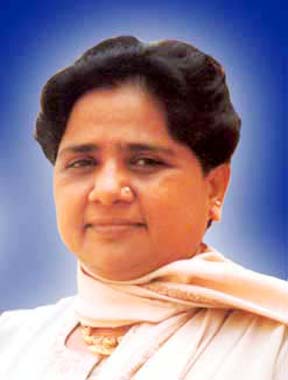
Two former Dalits have risen from humble beginnings and shed the caste they were born into. Mayavati has overcome not only being born an untouchable, but is also a woman. She is the country’s most famous lower caste member, according to author Sreedhar Pillai. (np) This year, Mayavati was voted into a four year position of chief minister of Uttar Pradesh, the most populated state of India. She has become an icon for the Dalits that continue to remain in a state of degradation and aspires to one day be the Prime Minister of India. These are lofty goals for a female Dalit, but she has proven her worth and her attaining her stated goal is within the realm of possibility.

Mayawati

Mayawati

            A second Dalit that has risen above his birth caste is Hari Kishan Pippal. Pippal stated in an interview that “as far as he could remember, people told him he was unclean, with a filthiness that had tainted his family for centuries. Teachers forced him to sit apart from other students and employers did not bother to pay him.” (AP, np) Pippal was not expected to have higher goals in life beyond that his Dalit father, a stone cobbler. Refusing to be passed off as inhuman, Pippal pushed himself to strive for much more in life and despite those who wished to suppress him, at 60 years old, he has made remarkable achievements. He is the owner of a hospital, a shoe factory, a car dealership and a publishing company in India and proof that in this day and age, a person can escape the caste they are born into.

Hari Kishan Pippal

Hari Kishan Pippal

The people who have broken out of the cycle of the caste system are rare and unique. Unfortunately, even with the changes in Indian government, the caste system is still a reality that Indian citizens must learn to live with and adapt to. If nothing else, the inspirational stories of these three people who have loosened the chains that bound them to the caste they were born into give other Dalits the hope for a brighter future. Gandhi predicted the rise of the Dalits out of the filth they have been held to for centuries and while it may take more centuries to end the persecution of these Indians, there is hope–if nothing else–and that is a start.

Works Cited

Associated Press. I was one of India unclean Dalits, now I am a millionaire. The National News. 2011. Web. 28 Oct. 2013.

Daniel, Ahron. The Caste System in Modern India. tripod.com/modernindia. 1999. Web. 27 Oct. 2013.

Deliege, Robert. The Untouchables of India. UK: Berg Publishers, 1999. Print.

Dowling, Mike. “The Caste System at mrdowling.com”. http://www.mrdowling.com. 2013. Web. 27 Oct. 2013.

Flood, Gavin. An Introduction to Hinduism. UK: Cambridge University Press, 1996. Print.

Kolanad, Gitanjali. Culture Shock! India: A Guide to Customs and Etiquette. Oregon: Graphic Arts Center Publishing Company. 1994. Print.

Moraes, Frank. India Today. New York: The Macmillian Company, 1960. Print.

Pillai, Sreedhar. A Dalit Prime Minister. Ibnlive.in.com. 2013. Web. 28 Oct. 2013.

SarDesai, D.R. India The Definitive History. Colorado: Westview Press, 2007. Print.

Shoulder, Kenneth., Anthony, Susai. The Everything Hinduism Book. Massachusetts: F&W Media, 2009. Print.  

Zinkin, Taya. Challenges in India. London: Chatto and Windus Ltd., 1966. Print.


Co-production in the Film Industry between Hollywood and Bollywood

Co-production in the Film Industry between Hollywood and Bollywood

Pattie Crider

York College of Pennsylvania

Abstract

The film industry worldwide has been recognized as a business that requires a cohesive effort of many to produce a single product. This paper will examine the production process in Hollywood, the film “capital” of the United States to that of Bollywood, the film industry of India. The production process of filming and advertising between the two differs greatly. Hollywood has realized the effectiveness of the Bollywood industry and has taken steps to become involved in the production of Indian films seeking to be part of this multi-million dollar industry. This essay will discuss the involvement of film companies from the United States in the attempt to reap the benefits of films produced in the Bollywood industry. I predict there will be a difficult learning curve for the American film companies to realize what makes Bollywood productions successful.

Keywords: Hollywood, Bollywood, film industry

The Co-production of the Film Industry between Hollywood and Bollywood

            Hollywood and Bollywood are the largest film industries in the world respectively. Each country had their own method of producing and promoting the films that best serves them financially. The differences between the two are numerous. To better understand how the film industry functions in each country, I will briefly examine each prior to discussing the joint efforts of the two film leaders. This examination will help to understand the great financial differences and risks involved for the film company.

Hollywood Productions

            The first feature movie was produced in Hollywood, California in 1911, and the name “Hollywood” became so widely associated with the business that it became the accepted name for the entire industry. Hollywood functions as an industry that is backed by individuals willing to risk large amounts of money with only a possibility of gaining a profit. A movie, even one that is an instant hit may take a decade or more to recoup the initial investment.  The time required to see a profit may be the reason individuals are not eager to invest. “If I’m sitting on $2 billion, will I invest in a Hollywood studio?” asks Anita Elberse, a Harvard Business School professor who studies the entertainment industry (Davidson, 2012). Because of the great risks involved, the movie productions in the United States are generally left to the established film giants, those being Sony, Disney, Warner Brothers, and 20th Century Fox. (Rasul & Proffitt, 2012) These mentioned film companies’ front millions of dollars to cover the expenses of production from the purchase of a script to the casting agents, and securing a promising actor. “The nature of the film industry, particularly in the West, is intrinsically different from other media in that it relies on the viewer to generate revenue rather than advertisers or funding by the government” (Rasul & Proffitt, 2012). In other words, if the movie is released at the cost of millions and it flops in the theater, there is little that can be done to recoup the investment. To help defray the cost of production, the companies rely on profits from DVD sales, product placement agreements, and film releases abroad.

Bollywood Productions

            Cinema in India is a two billion dollar a year industry (Das, 2009). The production of movies in India differs from Hollywood in two different ways. First, the actors are the major draw in Indian cinema and secondly, the production and distribution of these films are controlled by the relatives and close friends of the major Bollywood stars (Rasul & Proffitt, 2012). This tight-knit group of friends and relatives keep the cost of production to a minimum in order to maximize the films profit. Also to increase the profit line, Bollywood accepts brand placement deals from multinational advertisers (Nelson & Devanthan, 2006). The deal struck between a consumer product company and an Indian production house will allow for a substantial increase to the filming budget. In some instances, Western companies will pay for a consumer product to be placed in multiple scenes or added to the background to promote these products, directly or subconsciously, in Indian film. For example, in 2001, Coca-Cola paid $670,000 (approximately 20% of the film’s production costs) to have the stars drink Coca-Cola in the movie and have Coca-Cola signage added to the scenery during filming (Nelson & Devanthan, 2006). This product placement increases Indian awareness of Western products and allows globalization to enter into the daily lives of movie viewers. Unlike movie viewing in the West, people visit cinemas in India nearly daily. There are 13,000 cinemas across India and nearly 11,000,000 people of India’s 1 billion citizens watch a movie daily. This places Bollywood cinema above Hollywood in box office sales (Singh, 2013). The now dominate Indian cinema has drawn the attention of Hollywood as the West has realized the potential opportunity to profit from producing films in India. Entertainment analyst Smita Jha stated, “For Hollywood studios, expanding globally no longer means only pushing their products in these markets” (Rasul & Proffitt 2012). The West now has interest in more than just placing products and encouraging Western integration through globalization; Hollywood wants a slice of Bollywood.

Aamir-khan

Hollywood and Bollywood Unite

            The first movie production by Hollywood in India was in November 2007 with the Sony Pictures production of “Saawariya” (Beloved) based on Russian author Dostoyevsky’s short story, White Nights, with an operating cost of $7 million. The same day “Om Shanti Om” (Om Peace Om) was released by Shah Rukh Khan, an Indian cinema superstar and movie producer. Khan and many of his star-studded friends were featured in this movie. The Sony Pictures production was crushed by the independent Indian production. “Saawariya” generated a mere $9 million while Khan’s production generated an astounding $21 million in box office sales (Chopra, 2009). While this may have been somewhat embarrassing to Sony, the loss did not deter Hollywood from continuing to see production opportunities. The size of Hollywood production companies and their ability to adjust the profit or loss per film in order to receive continued support from investors, assures no long-term economic affect on the business. This initial failure by Sony was absorbed and a second Hollywood production company, Disney, debuted as a co-producer of an animated film titled Roadside Romeo (Rasul & Proffitt 2012).

roadside_romeo_28_10x7

            Disney took a safer approach in co-producing with the established Bollywood company, Yash Raj Films. The cost of the animated movie Roadside Romeo was approximately 3.5 million and the gross ticket sales amounted to the same (Chopra, 2009). This breaking even in production costs is what most Hollywood companies are happy to achieve. Hollywood relies on movie related consumer products, DVD sales, soundtracks, and international cinema releases to increase their profits. Bollywood, declared an industry by the Indian government in 1998, is happy to co-produce with Hollywood. When Bollywood was declared an industry, the Indian government reduced the cost of entertainment taxes to facilitate foreign investment and provide loans to the production companies (Rasul & Proffitt 2012). This change by the government opened the doors for Hollywood to co-produce with little taxation. The opportunity for investment with little long term risk was welcomed by Hollywood, still eager to profit from the box office sales in India. A typical Bollywood film “cost less than $20 million to produce, compared to Hollywood movies costing upwards of $100 million or more” (Das, 2009). Since the initial attempt by Sony Pictures to produce a movie in India it has been realized that Indian cinemas have little interest in Hollywood productions and a different approach needed to be examined.

The learning curve for Hollywood has been a difficult one. The traditional Indian movie is based on the movie star and is nearly always a musical. The soundtrack to the movie is released prior to the movie to increase public interest. Movie goers expect at least a 3 hour film that includes an intermission. They also expect to be entertained with Western influence. Bollywood movies are a combination of musical numbers with action and love scenes (Melwani, 2013). Think of a movie that blends Chicago: The Musical, DieHard, and James Bond. This sounds like a maddening mess, but it is exactly what the viewer’s want as long as their favorite Bollywood star is the main character. In extreme contrast to Hollywood films, Bollywood has no intimate love scenes, nor is there any bloodshed in action sequences. The actors are held to high standards by the viewing audience and the people of India look up to the stars as role models, where they may be voted in as government officials or even have temples constructed in their honor (Nelson & Devanathan 2006). A demand for Bollywood movies to be filmed in the United States, especially in New York City, is the current trend. The films rely on the same format of music and dance, bright costumes and sets and recognized stars, but the change is the cost of filming. Filming in the West is much more costly to the Bollywood industry, but something Hollywood is accustomed to.

new-york-hindi-movie-stills28

Current Trend in Filming

            Hollywood has come to realize there is little demand for filming and producing movies in India.  Rather, the demand is for Bollywood to film in the larger U.S. cities and release the productions in India and the United States, as well as other foreign markets. “There are so many Bollywood films being shot in the U.S. that Shah organizes just about everything for them from immigration to cargo, Hollywood costume designers, digital work and stunt teams.” Shah estimates he has brought more than 95,000 jobs to America with his film productions (Melwani, 2013). This twist to the filming industry between Bollywood and Hollywood seems to be moving in a promising direction. American viewers have discovered the Bollywood films with their unique blend of Hindi and English language, referred to as “Hinglish” and over-the-top action scenes. I viewed several trailers for Bollywood movies and found them easy to follow. English is used visually, flashed across the screen, and blended into the script of the actors. The trailers highlight a dramatically different type of movie that American’s have grown to love, but one that I personally would be interested in viewing. Hollywood may have had to learn the hard way, but welcoming Bollywood to America has stimulated our economy and created new business ties in the film industry and opened the doors to a whole new viewing audience.

Curious to see a Bollywood movie trailer? Check this one out.

References

Chopra, A. (2009, March 20). Stumbling toward Bollywood. The New York Times. Retrieved from  http://www.nytimes.com/2009/03/22/movies/22chop.html

Das, J. (2009, June 21). Indian films in New York create Bollywood-on-Hudson. Reuters. Retrieved from http://www.reuters.com/article/idUSTRE55L00420090622

Davidson, A. (2012, June 26). How does the film industry make money? The New York Times. Retrieved from http://www.nytimes.com/2012/07/01/magazine

Melwani, L. (2013, January 24) Made in America: Bollywood comes to the US. Lassi With Lavina.  http://www.lassiwithlavina.com/thebuzz/made-in-america-bollywood-comes-to-the-us/html

Nelson, M. & Devanathan, N. (2006 May-June) Brand placements Bollywood Style. The Journal   of Consumer Behaviour, Vol. 5, 211-221.

Ninian, A. (2003). Bollywood. EBSCO Publishing. 235-240.

Rasul, A. & Proffitt, J. (2012). An Irresistible Market: A Critical Analysis of Hollywood-Bollywood Coproductions. Communication, Culture & Critique, Vol. 5, 563-579.

Singh, P. (2013). An Analytical Study On Covert Advertising: Product Placement In Indian Cinema. International Journal of Research and Development, Vol. 2 Issue 1, 77-84

The Evolution of India

Click this link to read essay—->Historical Essay India

Disciplinary Writing

York College of PA

I cried after class

116_116

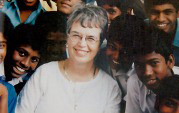
I broke down and cried after my India class. We had met the founder of HOINA, the orphanage I’ll be teaching at, and I stayed after to talk to Mrs. Large.  She won’t be in India while we are because for the first time in 25 years, she will be staying home, in the Lancaster area I believe, to celebrate her daughter’s birthday. Her daughter is turning 50.

~~~~~~~~~~~~~~~~~~~~~~~~~~~~~~~~~~~~~~~~~~~~~~~~~~~~~~~~~~~~~~~~~~~~~~~~~~~~~~~~~~~~~~~~~~~~~~~

Mrs. Large believes God is 100% behind her in the path she took in her life. She was a teacher in the 1960’s and in 1971 she realized God intended for her to adopt children and bring them into her home. She believed he intended for her to adopt American Indian children, but on her first attempt, was completely shut down.  If she wasn’t at least a 1/3 Indian herself, she could not adopt an Indian child.  She was crushed and unclear of what her next steps should be.

In 1975 she met a gentleman named Dr. Livingston and she told him about her calling to adopt American Indian children.  Dr. Livingston told her she needed to come to India, his county, where there were thousands of children in need of homes.

Mrs. Large quit her job, and with her husband and children by her side, she traveled to India. Her husband was certain she had lost her mind, but there was no talking her out of it. On August 3, 1975, they moved to India and in a unanimous vote, they adopted a little girl.  Mrs. Large realized immediately-they needed to build an orphanage.

In 1978, Mrs. Large rented a house for $15 a month and 7 young boys lived there. All seven graduated college and have numerous personal achievements. After a fire that burned much of the village, the rented house remained but the rent was raised to a ridiculous amount of money.  So with $2,900 and a grant for $10k, they bought 1.75 acres and built an orphanage. This land became over-run with cobras. The neighboring community worshiped the cobras and regardless of how many that were killed on the orphanage property, no one was safe.  This land was sold for over a million dollars…not a bad profit.

With this money and support of churches and Christian organizations, in 1999, 24 acres was purchased.  The girl’s orphanage on a separate piece of land was sold and for the first time, children of both sexes were housed on one property.  An additional 50 acres has been purchased and now the orphanage compound is nearly 75 acres large and is occupied by 100 boys, 100 girl, staff and their family, 23 cows, 10 goats (that cause much mischief), rabbits and ducks.

Mr. & Mrs. Large (called Papa and Mom by everyone in India, even the local police) have helped raise over 4,000 orphaned or abandoned children since she first acted on the will God intended.

Mom said she knew her calling and now, after saving 4,000 children, humanity is recognizing her calling.

~~~~~~~~~~~~~~~~~~~~~~~~~~~~~~~~~~~~~~~~~~~~~~~~~~~~~~~~~~~~~~~~~~~~~~~~~~~~~~~~~~~~~~~~~~~~~~~~~~~

I cried because last night, John said I don’t care about my daughter because I chose to take three weeks after Christmas to make this trip to India. He says I am self-centered and not considerate of others, and I don’t care about Tesla, other than to boo-hoo that I don’t have her and he does.

John would never listen long enough to understand, nor really ever comprehend, what I do.  I told him he could only wish he understood me and he should go back to his little world.

Then he claimed, “I gave you everything, I did everything for you, put up with your bullshit and all you did was stab me in the back over and over.  I can’t believe you would  think I’d even think about being nice to you again. I pray to God our daughter doesn’t grow up with the same attitude you have.”

After I stopped laughing, I said “I can only hope Tesla is more like me and least like you. I don’t care if you’re bitter.  You deserve it. I have an amazing future ahead of me, one that Tesla will be a part of…much more involved than what you allow for now.  The more you say, the more it shows how bitter you still are at our break up. Goodnight.”  (He stopped texting me after that.)

Mrs. Large said she followed where God led her and she trusted in him. I cried because John, like some of Mrs. Large family, tried to make me feel guilty for having faith in God to go to India and make a difference. Papa and Mom said they understood my emotions and I should do what I feel is right. I know this trip is important in my life.

And I really know that I am happy.  Those tears were of relief, I suppose, knowing someone else understands. Tesla and I have talked several times now about this trip.  She wants to go to India someday also.  I will find a way to show Tesla India,  and all the places she wants to see.

It doesn’t matter what John says or thinks. I don’t have to listen to him anymore.

I listen to God.

~P.

Why Travel to India?

Pattie Crider

G241

Questions

September 13, 2013

Founder of The Homes of the Indian Nation: Darlene Large

Founder of The Homes of the Indian Nation: Darlene Large

  1. I believe service learning is taking what you have learned and applying it to practical situations in life.  Helping other who are disadvantaged and can benefit from the knowledge they may not have otherwise obtained. Not that I am especially knowledgeable in the situations of Indian people, but I it can be a mutual exchange of information, educating each other rather than a one-sided teaching approach
  2. Traveling abroad for me to help and teach orphans allows for me to also “help myself” to learning about them and their country and culture.  While educating myself and furthering my writing and photography, I will feel a sense of accomplishment and feeling of self-worth in helping others, especially orphans.
  3. There is “poor in the USA” and “poor in India.”  The two have little in common.  Few Americans truly understand the concept of being poor.  Poor to us means less material items and perhaps a lower food quality.  Poor in India means the possibility of death due to lack proper healthcare and nutrition. Poor is a word that refers to one’s wealth.  My view is it doesn’t take money to be happy but the needs for adequate existence of life may revolve around who has wealth and who does not.
  4. Globalization was once a slow-moving force of integrating world-wide view, ideas, politics, religion and other aspects of culture.  Now with the invention of the Internet, globalization is now taking place at a high rate of speed, connecting most areas of the world that are not in total seclusion.
  5. I am very interested in Hinduism.  The traditions, followers, ceremonies and history of Hinduism especially the meaning of Karma to India natives versus the Western understanding.  Also, I am interested in NGO’s and their ability to sustain their non-profit work through the use of rhetorical theory, appealing to people to support the children who are taken in at the HOINA orphanage.

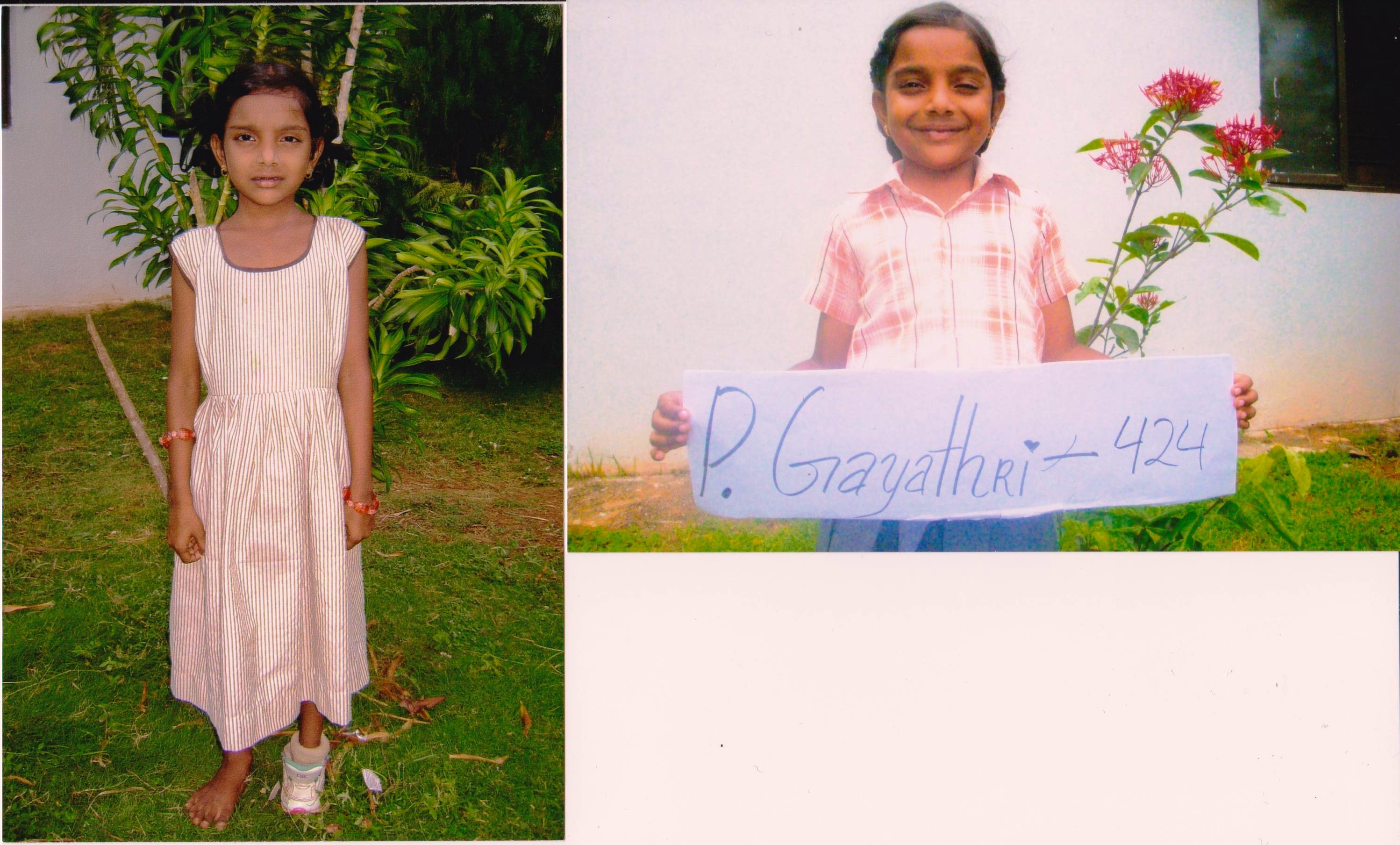
Meet Gayathri from India

Gayathri Pediredla  3rd grade

Gayathri Pediredla
In 2012 and now in 3rd grade in 2013

Dale and I have sponsored an orphan in India.  I received a note from her and two pictures.  The orphanage also sent me a bio sheet about this lovely little girl. (http://www.hoina.org/)

Gayathri Biography 

Date of Birth: September 11, 2004

 Date of Admission: June 14, 2012

 Family Background:

 Gayathrii’s parents were married in 1999 in an arranged marriage.  Her father worked as an auto driver. They had two children. In 2011 her father died from Zodise. Her mother took the children to live with relatives, but on the way Gayathri and her mother were injured from a fall. Her mother injured her spinal cord and her right arm. Gayathri’s foot was damaged. The doctor recommended that Gayathri come to HOINA.

 Gayathri is studying 3rd class at the government school. She likes lions, the color pink, and playing ball. She wants to be a district collector when she is older.


Why did I choose Gaya over all the other children in need of sponsorship?  Because she was born on September 11, 2004.  The same day I met John.  The date caught my eye and her story touched my heart.

Here is my first letter to Gaya.

click here——>Dear Gayathri 1<——–to read.

I can’t wait to meet her in December!

~P.