What the doctor said

When applying for scholarships,  the applicant usually needs to have letters of recommendation from two professors to accompany the application.

Here’s what one of my professor’s had to say.

Dear Colleagues:
I am happy to recommend Pattie Crider for the Sigma Tau Delta Senior Scholarship.
Pattie is a Professional Writing major and Religious Studies minor who maintains an excellent 3.47 GPA. She is very active in the major and in the English & Humanities Department as a whole. I speak for my colleagues as well as myself when I say that Pattie is a student whom we look forward to having in class and whose company we enjoy immensely during office hours. She is smart, curious, and hard working. Add to that potent academic combination Pattie’s great people skills and wicked sense of humor, and I imagine that you can understand why I think of her so highly.
Pattie has also been active in Department-related extracurricular activities. I can speak most confidently on Pattie’s contributions to The Spartan. Pattie has been a stalwart member of the staff for several years, and I am grateful for her devotion to this important College institution. She has written numerous article that have been published, and she’s done all of this work for no pay or academic credit. Indeed, it’s difficult to find students who will really commit themselves to The Spartan given its lack of tangible reward. Pattie’s service, then, is all the more admirable.
Pattie Crider would be a worthy recipient of the Sigma Tau Delta Senior Scholarship, and I ask that you carefully consider her application. In the meantime, if I can answer any questions about Pattie, please don’t hesitate to contact me.

See…they love me…they really love me!  LOL ~P.

Esther gets beaten on Halloween

I'mir R. Williams & Esther Schmucker

I’mir R. Williams & Esther Schmucker

You would think after filing 3 petitions from abuse orders against I’mir R. Williams (Mirkat), Esther would have gone through with one of them.

I’m not placing blame on the victim here because I understand how it feels to be in love with someone and just not know what to do when that person treats you like shit.

I hope now that Mirkat has gone so far as to mess up her face, breaking her teeth and I’m sure crushing her spirit, this should be a HUGE clue.  If a man threatens you…says he is going to chop you into pieces or as I was told, “they’ll never find your body”, believe it and get the hell away from him as soon as possible.

Also, since this loser rapper Mirkat is on the lam…if anyone knows where he is, report him to the police!!!

And Esther…since I know you read my blog, I never had anything against you personally.  It’s all about writing what people are interested in reading. So block me or don’t block me on Twitter, I’m still going to write about the Amish Mafia.

It’s a shame the Amish Mafia isn’t real because Levi and his gang need to put a hurting on this loser.

http://www.pennlive.com/midstate/index.ssf/2013/11/amish_mafia_star_esther_beaten.html

Douglass: An escaped slave

This post is about Frederick Douglass, who lived from 1818-1895 and escaped from his owners in 1838.  Douglass gave his first speech against slavery in 1841 to a mixed crowd of whites and blacks.

The question posed by my professor for a mini essay was: “What were the primary rhetorical obstacles for African Americans when they worked alongside white abolitionists?”

Equal Rights?

            I found it ironic that the white abolitionists were all about rallying for the black race as long as the people they were rallying for didn’t get more attention than the white folks or take jobs the white folks wanted. That was pretty ignorant in my humble opinion, and I don’t mean ignorant as uninformed, I mean the other ignorant.

Douglass had a wife and five kids to support, but when it came down to him getting a job on the docks as a caulker; the white folks objected to him being hired. Now maybe this could slide by as the people he was completing with for a job might not have necessarily been white abolitionists, but once he began traveling with the Garrisonian abolitionists, I would have thought this racism would have ceased. I was wrong.

Douglass traveled all over speaking against slavery but apparently he was used more as a prop than a speaker. The white speakers wanted to do the talking and just parade Douglass out on stage to show the audience his scars from the vicious beatings he was given at the hands of his white owners. As if that wasn’t insulting enough, as Douglass developed his voice and made use of rhetorical tones, his white friends believed he was destroying his credibility as a slave. I suppose the more he sounded like the white folks, educated with no Southern draw, the less likely anyone would believe he had been a slave. They even doubted that he had in fact written his own speeches. If he hadn’t had the scars, would they have believed anything?

Fact: There are times that my own race disgusts me, historically and presently.

Don’t just preach it, Live it

The Rhetorical Appeals and Delivery in Reaching a Community of God’s People

BW-WeAreGodsPeople

            Nothing moves me quite like a good sermon. I want to become emotionally involved in what the preacher is saying and have the Bible verses stated so I can look them up while the sermon is being delivered. I expect the preacher to approach the sermon with logic and have it apply to my own life.  The words should roll off the preachers tongue with conviction and be genuine in the attempt to move my heart to save my soul. It is easier to accept my sinful nature when the preacher acknowledges his or her own sinfulness and asks God to be forgiven along with the rest of us. Preachers must create a community within their congregation that makes people feel welcome, regardless of their past. To understand the necessary appeals and the delivery that should be used to make this possible, we will delve into three journal articles that focus on the goals of preaching to God’s people.

First we will explore how the journal articles define God’s people. Charney stated that God’s people are those who have been abandoned (262) or are humiliated, deprived, and down cast (263). Charney also describes God’s people as the lowliest of individuals that are angry and traumatized (265). Souders describes God’s people as those who realize their natural, sinful human condition (324) while Manolescu quotes Campbell in describing them as “the inferior ranks of people” (162). What can be taken from all three journals is that God’s people are damaged goods. All humans are in dire need of a preacher to save them from themselves in order to one day ascend to Heaven rather than be delivered straight to Hell as an unsaved soul. The authors are straight-forward with the description of the human condition that casts all as unworthy sinners, but offers the opportunity for forgiveness.

Next are the rhetorical appeals and delivery style that preachers must use to properly persuade the damaged humans to everlasting life. Charney states the desire is to foster cohesiveness both socially and culturally within a congregation through the use of Psalms (264). The Psalms, either sung or spoken in verse, should be done as a public declaration, as well in private (248). The act of declaring ones faith in public will allow others the chance to humiliate the speaker, but holding back a declaration of praise or affirmation of faith would be a sin. Manolescu stated that Campbell believed an emotional appeal should be used to move a congregation (163, 165) in a gentle, persuasive manner rather than a zealous manner delivered in the grand style (165-66). An overly zealous delivery may be found offensive to a congregation and should be avoided so not to alienate or strike fear into the listeners. Rather a logical approach with reason and genuine passion will fulfill the rhetorical appeal. Souders is in agreement with Manolescu that the influence and beliefs of the preacher–the logos–should be delivered in the plain style (321) while using reason (332) and natural science (320) to help the congregation understand the meaning of the sermon. Also significant, Souders points out that Beecher stated it is the job of the preacher to develop true Christians by inspiring, nurturing, and guiding them to Divine Understanding (336). This truth will be achieved through being a “good man” as defined by Quintilian in that the preacher had better be practicing what he preaches. This, in my opinion, is the most difficult task of a preacher–to lead by example–as even preachers are sinners by nature.

Lastly, are the goals of a preacher as presented in the journal articles. In Charney’s article, the Psalms are an example of how people, preachers included, should sing the praises of God publicly (260) as a celebration of God’s sacrifice on human’s behalf. A pastor not only helps a congregation reaffirm their faith, but reaffirms their own in doing so. Manolescu writes that Campbell advocates the use of certain doctrines in order to promote the correctness of a congregation and to convert non-believers by a means of passion that is communicated from the speaker to the listeners to move their will (168, 174). Souders article on Beecher perhaps explains the goals of preaching the best. A preacher must relate the sermons to the lives of the congregation to be create a fundamental transformation of the listeners (318). Beecher disposed of the past methods of preaching to the elite, the educated, the obedient and those of authority (323) and instead taught all how to model their life after Christ allowing his congregation to feel loved and included. Beecher even went as far as to refuse to preach from the pulpit (324) in order to make his presence at the same level of his congregation. I personally have never witnessed such a thing but find that admirable that he wants people to see him as an equal instead of above those who are listening. Beecher strived for a fundamental transformation of his listeners based on truth through pathos, rather than the ethos of his learned knowledge. He wished to “make religion attractive by the goodness that men see in you” and took this approach to heart by focusing his sermons on the audience rather than the rules (325). In doing this Beecher’s objective was to “lift the lives of listeners from the mundane and normal, up to the divine” (327). This is what a congregation needs from their preacher, to feel inspired to release the stress of their daily lives by turning their troubles over to God. It is then that God is given control and the ability to relieve them of the problems that bring their lives down.

The three journal articles I analyzed all focused on the importance of a preacher in creating an inviting, warm atmosphere for their community. A preacher must realize that God’s people are not perfect and never will be, and in that, they must acknowledge their own sinfulness in order for their listeners to be accepting of their words. No one person is better than another and a congregation will turn away from a preacher who teaches otherwise. Emotional appeals are important to the listeners as they bridge a gap that may be otherwise be missing in a person’s life. Everyone, at some point, has felt humiliated or deprived, angry or depressed, so the importance of preaching and teaching to reach those people and saving their souls is the highest of all goals of a preacher because if they fail to do so, to save that person from their sinful nature, the preacher also fails in their commitment to save God’s people.

Works Cited

Charney, Davida H. “Performativity and Persuasion in the Hebrew Book of Psalms: A Rhetorical Analysis of Psalms 116 and 22.” Rhetoric Society Quarterly. June 2010: 247-268. Print.

Manolescu, Beth I. “Religious Reasons for Campbell’s View of Emotional Appeals in Philosophy   of Rhetoric.” Rhetoric Society Quarterly. Apr. 2007: 159-180. Print.

Souders, Michael. “Truthing it in Love”: Henry Ward Beecher’s Homiletic Theories of Truth,        Beauty, Love, and the Christian Faith.” Rhetoric Society Quarterly. Sept. 2011: 316-339.        Print.

Tainted by Birth: India’s Caste System

Pattie Crider

Professor Waddell

WRT 225

October 30, 2013

Tainted by Birth: India’s Caste System

            Americans take for granted their rights as citizens, but not all countries give their citizens such rights through a democratic system or a written constitution. One such country, India, has grouped the Indian citizens into castes since ancient times based on the beliefs of the Hinduism religion. The word “caste” is taken from the Portuguese word, “casta” which means “race” and all citizens are born into one of multiple caste groups. (Shouler, 157) These castes will determine the quality of life for an Indian person, who they may marry and will mark them permanently until their earthly walk comes to an end. The caste system consists of four named groups and one group which had no formal name but the people are referred to as “untouchables” placing them at the very bottom of civilization. The four castes were based on parts of the body, the Brahmins (mouth), Kshatriyas (arms), Vaishyas (thighs), and Sudras (feet). (SarDesai, 105) A brief explanation of these groups will follow before moving on to the caste referred to as untouchable.

India caste system

            The Brahmin caste was the “dominant group, the very model of the Indian social hierarchy” (Deliege, 32) and the smallest of all in caste size. This group consisted of priests and academics, and the Verdic word brahman means prayer, which would be expressed through the mouth. The Kshatriya caste consisted of the warriors and kings and their responsibility was to protect and rule by use of their arms. This group wears sacred threads indicating they have been born twice, once physically and the second spiritually. (Shouler, 154) The Kshatriya caste and Brahmin caste often worked closely together in order to remain in control of the social order. The small size of the two castes would appear to put them in jeopardy, but the long tradition of Indian hierarchy and religion retains their high-seated positions.

The third caste, named Vaishyas, is made up of merchants or agriculturalists. (Shouler, 155) This group is also referred to as the common people and mainly comprised of farmers. Their responsibility is to ensure there is food for the community and they are an important part of the Indian economy. The physical nature of their work reflects back to their depicted body part, the thighs. The last named caste of India, is the Shudras, portrayed as the feet. (Moraes, 7) This group was considered the lowest of all social groups because they are servants. They perform personal services for the castes above them and those services range from barbers, launderers, cooks, maids, gardeners, drivers and the like. (Kolanad, 157) The only tasks that did not fall to the Shudras were those that were found to be so undignified, it could only be performed by that of an untouchable. To be included in any one of the four castes places that person into an acceptable position within the Indian nation, all others fall into that of an untouchable, the lowest in society and not even considered to be part of humankind.

The Untouchables: Deemed Inhuman

            The untouchables fall below the Shudra caste and were not given a formal caste name. These people were often foreigners, lawbreakers, people from isolated tribes and people stricken by disease.  While the caste system was abolished after the fall of British rule in 1947, (Shouler, 156) and outlawed in the Indian Constitution in 1950, (Kolanad, 39) the inhumane treatment of those people continues today. The untouchables must live by a strict rules implemented by all castes above them, as well as by other untouchables. The untouchables have been given many names over time and also fall into sub-castes in India. There are a substantial number of people that fall into what is presently called the Dalits.

There are approximately 150 million Dalits in India today. (Dowling, np) This number may be low because it is difficult in gathering accurate numbers when the citizens are embarrassed to reveal their caste name. These people are excluded from living in the villages, must dress in rags, eat only scraps and are degraded at all times.  (Deliege, 12) The term Dalit is a euphemism for untouchable and the most common name used. When asked by Robert Deliege what caste an Indian is from, they would often refuse to give their caste name or instead replied, “What does it matter? After all we are human beings like you.” (14) While centuries have passed since the caste system was placed, the treatment of untouchables is still appalling to those of the West. In an attempt to be politically correct, three names have become widely used in place of the label untouchable. Those names are Harijan, Scheduled Caste and Dalits. Gandhi called the untouchables Harijans (blessed through suffering) and worked to see these people treated more humanely. In the past the untouchables deemed to have problems following Indian law were cruelly punished by being fed to wild dogs or burned to death on a “red hot iron bed.” (Flood 59, 60) Gandhi, who only desired a peaceful means of demonstrations in life found this treatment of human-beings unacceptable. In time, the untouchables began referring to themselves, when forced to give a caste name, as being a Dalit, meaning the oppressed people.  Outsiders, generally scholars, choose to identify this group of Indians as Scheduled Caste.

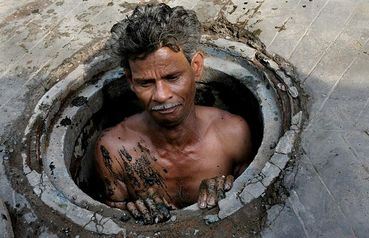
The untouchables can be found in any area of India.  It is not limited to one region or state. Every village has untouchables who must do the “dirty work” that no other caste is held responsible in completing.  These duties always have some tie to filth. (Deliege, 25) The untouchables must use buckets to clean out the toilets, remove waste and dead animals along the streets, clean the bodies of the dead, skin and tan the hides of animals, ward off evil spirits and provide menial tasks considered unclean for the higher castes of the community. This work is always hired out to untouchables to ensure the lives of India’s communities continue to run smoothly. The Dalits were also expected to follow the “unwritten rules” pertaining to their class of people. Dalits could not eat with members of other castes and they must have separate glasses for drinking and utensils for eating; (Moraes, 28) these examples of the expectations nearly make sense in a hygienic matter. Other laws, such as separate burial grounds, segregated classrooms and sub-standard wages (Shouler, 152) are rules enforced strictly to humiliate this class of people. Regardless of the modern era India has entered and the separation of religion and state, the caste traditions are still carried on by Indian citizens.

untouchable

            The question today is: have the changes in the law that took place in 1950 made any changes in the lives of those deemed untouchable? Zinkin states, “Untouchability has disappeared because the Constitution makes the enforcement of it an offence. Everyone pretends that caste no longer matters because India is modern.” (177) This may be true in so much that the government no longer recognizes an organized caste system but the reality is the people of India continue the hierarchy tradition to present day. There are millions of untouchables in castes and sub-castes that are given names to cause insult and humiliation. Deliege listed only a few of those caste names, some being, Mala, Nadar, Pulayan, Paraiyar, Chamars, Bhangis and Mahars (21) that continue to lower an Indian to what is considered a non-human. It may seem as though India has not made much progress in freeing the people from being called non-human and living a life of degradation involving the filth of the community, but recently there has been relief as the Indian people have taken a Democratic approach to electing leaders.

Emerging from the Filth

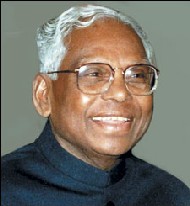
            Gandhi had high hopes for the Dalits and is quoted as stating, “The country will attain the real freedom only on the day a Dalit would become the president of this country.” Gandhi’s life was cut short with his assassination in 1948, but had he lived, he would rejoice that the Indian people elected a Dalit to the presidency. K. R. Narayanan served India as president from 1997 to 2002. (Dowling, np) This was no small victory for the enormous group of oppressed people and since the election of a Dalit to presidency, the lives of the untouchables has improved. Even with the laws passed against discrimination, those who are caste as Dalits remain low in the social order today and those fortunate enough to be born into the higher castes remain high in the social hierarchy despite the changes within India.  While being born into a caste may seem to seal the fate of an Indian, there is the possibility of moving up in the caste system. “One’s birth determined one’s class, which could be altered only with rebirth, depending on one’s karma.” (SarDesai, 104) Based on this spiritual rebirth, an Indian may move up in the caste system as this person has pleased the gods and found worthy to transcend to a higher position in the community. This has been achieved by K. R. Narayanan and numerous other Indian citizens, thus deserving mention in this essay.

K.R.Narayanan

K.R.Narayanan

Two former Dalits have risen from humble beginnings and shed the caste they were born into. Mayavati has overcome not only being born an untouchable, but is also a woman. She is the country’s most famous lower caste member, according to author Sreedhar Pillai. (np) This year, Mayavati was voted into a four year position of chief minister of Uttar Pradesh, the most populated state of India. She has become an icon for the Dalits that continue to remain in a state of degradation and aspires to one day be the Prime Minister of India. These are lofty goals for a female Dalit, but she has proven her worth and her attaining her stated goal is within the realm of possibility.

Mayawati

Mayawati

            A second Dalit that has risen above his birth caste is Hari Kishan Pippal. Pippal stated in an interview that “as far as he could remember, people told him he was unclean, with a filthiness that had tainted his family for centuries. Teachers forced him to sit apart from other students and employers did not bother to pay him.” (AP, np) Pippal was not expected to have higher goals in life beyond that his Dalit father, a stone cobbler. Refusing to be passed off as inhuman, Pippal pushed himself to strive for much more in life and despite those who wished to suppress him, at 60 years old, he has made remarkable achievements. He is the owner of a hospital, a shoe factory, a car dealership and a publishing company in India and proof that in this day and age, a person can escape the caste they are born into.

Hari Kishan Pippal

Hari Kishan Pippal

The people who have broken out of the cycle of the caste system are rare and unique. Unfortunately, even with the changes in Indian government, the caste system is still a reality that Indian citizens must learn to live with and adapt to. If nothing else, the inspirational stories of these three people who have loosened the chains that bound them to the caste they were born into give other Dalits the hope for a brighter future. Gandhi predicted the rise of the Dalits out of the filth they have been held to for centuries and while it may take more centuries to end the persecution of these Indians, there is hope–if nothing else–and that is a start.

Works Cited

Associated Press. I was one of India unclean Dalits, now I am a millionaire. The National News. 2011. Web. 28 Oct. 2013.

Daniel, Ahron. The Caste System in Modern India. tripod.com/modernindia. 1999. Web. 27 Oct. 2013.

Deliege, Robert. The Untouchables of India. UK: Berg Publishers, 1999. Print.

Dowling, Mike. “The Caste System at mrdowling.com”. http://www.mrdowling.com. 2013. Web. 27 Oct. 2013.

Flood, Gavin. An Introduction to Hinduism. UK: Cambridge University Press, 1996. Print.

Kolanad, Gitanjali. Culture Shock! India: A Guide to Customs and Etiquette. Oregon: Graphic Arts Center Publishing Company. 1994. Print.

Moraes, Frank. India Today. New York: The Macmillian Company, 1960. Print.

Pillai, Sreedhar. A Dalit Prime Minister. Ibnlive.in.com. 2013. Web. 28 Oct. 2013.

SarDesai, D.R. India The Definitive History. Colorado: Westview Press, 2007. Print.

Shoulder, Kenneth., Anthony, Susai. The Everything Hinduism Book. Massachusetts: F&W Media, 2009. Print.  

Zinkin, Taya. Challenges in India. London: Chatto and Windus Ltd., 1966. Print.


Co-production in the Film Industry between Hollywood and Bollywood

Co-production in the Film Industry between Hollywood and Bollywood

Pattie Crider

York College of Pennsylvania

Abstract

The film industry worldwide has been recognized as a business that requires a cohesive effort of many to produce a single product. This paper will examine the production process in Hollywood, the film “capital” of the United States to that of Bollywood, the film industry of India. The production process of filming and advertising between the two differs greatly. Hollywood has realized the effectiveness of the Bollywood industry and has taken steps to become involved in the production of Indian films seeking to be part of this multi-million dollar industry. This essay will discuss the involvement of film companies from the United States in the attempt to reap the benefits of films produced in the Bollywood industry. I predict there will be a difficult learning curve for the American film companies to realize what makes Bollywood productions successful.

Keywords: Hollywood, Bollywood, film industry

The Co-production of the Film Industry between Hollywood and Bollywood

            Hollywood and Bollywood are the largest film industries in the world respectively. Each country had their own method of producing and promoting the films that best serves them financially. The differences between the two are numerous. To better understand how the film industry functions in each country, I will briefly examine each prior to discussing the joint efforts of the two film leaders. This examination will help to understand the great financial differences and risks involved for the film company.

Hollywood Productions

            The first feature movie was produced in Hollywood, California in 1911, and the name “Hollywood” became so widely associated with the business that it became the accepted name for the entire industry. Hollywood functions as an industry that is backed by individuals willing to risk large amounts of money with only a possibility of gaining a profit. A movie, even one that is an instant hit may take a decade or more to recoup the initial investment.  The time required to see a profit may be the reason individuals are not eager to invest. “If I’m sitting on $2 billion, will I invest in a Hollywood studio?” asks Anita Elberse, a Harvard Business School professor who studies the entertainment industry (Davidson, 2012). Because of the great risks involved, the movie productions in the United States are generally left to the established film giants, those being Sony, Disney, Warner Brothers, and 20th Century Fox. (Rasul & Proffitt, 2012) These mentioned film companies’ front millions of dollars to cover the expenses of production from the purchase of a script to the casting agents, and securing a promising actor. “The nature of the film industry, particularly in the West, is intrinsically different from other media in that it relies on the viewer to generate revenue rather than advertisers or funding by the government” (Rasul & Proffitt, 2012). In other words, if the movie is released at the cost of millions and it flops in the theater, there is little that can be done to recoup the investment. To help defray the cost of production, the companies rely on profits from DVD sales, product placement agreements, and film releases abroad.

Bollywood Productions

            Cinema in India is a two billion dollar a year industry (Das, 2009). The production of movies in India differs from Hollywood in two different ways. First, the actors are the major draw in Indian cinema and secondly, the production and distribution of these films are controlled by the relatives and close friends of the major Bollywood stars (Rasul & Proffitt, 2012). This tight-knit group of friends and relatives keep the cost of production to a minimum in order to maximize the films profit. Also to increase the profit line, Bollywood accepts brand placement deals from multinational advertisers (Nelson & Devanthan, 2006). The deal struck between a consumer product company and an Indian production house will allow for a substantial increase to the filming budget. In some instances, Western companies will pay for a consumer product to be placed in multiple scenes or added to the background to promote these products, directly or subconsciously, in Indian film. For example, in 2001, Coca-Cola paid $670,000 (approximately 20% of the film’s production costs) to have the stars drink Coca-Cola in the movie and have Coca-Cola signage added to the scenery during filming (Nelson & Devanthan, 2006). This product placement increases Indian awareness of Western products and allows globalization to enter into the daily lives of movie viewers. Unlike movie viewing in the West, people visit cinemas in India nearly daily. There are 13,000 cinemas across India and nearly 11,000,000 people of India’s 1 billion citizens watch a movie daily. This places Bollywood cinema above Hollywood in box office sales (Singh, 2013). The now dominate Indian cinema has drawn the attention of Hollywood as the West has realized the potential opportunity to profit from producing films in India. Entertainment analyst Smita Jha stated, “For Hollywood studios, expanding globally no longer means only pushing their products in these markets” (Rasul & Proffitt 2012). The West now has interest in more than just placing products and encouraging Western integration through globalization; Hollywood wants a slice of Bollywood.

Aamir-khan

Hollywood and Bollywood Unite

            The first movie production by Hollywood in India was in November 2007 with the Sony Pictures production of “Saawariya” (Beloved) based on Russian author Dostoyevsky’s short story, White Nights, with an operating cost of $7 million. The same day “Om Shanti Om” (Om Peace Om) was released by Shah Rukh Khan, an Indian cinema superstar and movie producer. Khan and many of his star-studded friends were featured in this movie. The Sony Pictures production was crushed by the independent Indian production. “Saawariya” generated a mere $9 million while Khan’s production generated an astounding $21 million in box office sales (Chopra, 2009). While this may have been somewhat embarrassing to Sony, the loss did not deter Hollywood from continuing to see production opportunities. The size of Hollywood production companies and their ability to adjust the profit or loss per film in order to receive continued support from investors, assures no long-term economic affect on the business. This initial failure by Sony was absorbed and a second Hollywood production company, Disney, debuted as a co-producer of an animated film titled Roadside Romeo (Rasul & Proffitt 2012).

roadside_romeo_28_10x7

            Disney took a safer approach in co-producing with the established Bollywood company, Yash Raj Films. The cost of the animated movie Roadside Romeo was approximately 3.5 million and the gross ticket sales amounted to the same (Chopra, 2009). This breaking even in production costs is what most Hollywood companies are happy to achieve. Hollywood relies on movie related consumer products, DVD sales, soundtracks, and international cinema releases to increase their profits. Bollywood, declared an industry by the Indian government in 1998, is happy to co-produce with Hollywood. When Bollywood was declared an industry, the Indian government reduced the cost of entertainment taxes to facilitate foreign investment and provide loans to the production companies (Rasul & Proffitt 2012). This change by the government opened the doors for Hollywood to co-produce with little taxation. The opportunity for investment with little long term risk was welcomed by Hollywood, still eager to profit from the box office sales in India. A typical Bollywood film “cost less than $20 million to produce, compared to Hollywood movies costing upwards of $100 million or more” (Das, 2009). Since the initial attempt by Sony Pictures to produce a movie in India it has been realized that Indian cinemas have little interest in Hollywood productions and a different approach needed to be examined.

The learning curve for Hollywood has been a difficult one. The traditional Indian movie is based on the movie star and is nearly always a musical. The soundtrack to the movie is released prior to the movie to increase public interest. Movie goers expect at least a 3 hour film that includes an intermission. They also expect to be entertained with Western influence. Bollywood movies are a combination of musical numbers with action and love scenes (Melwani, 2013). Think of a movie that blends Chicago: The Musical, DieHard, and James Bond. This sounds like a maddening mess, but it is exactly what the viewer’s want as long as their favorite Bollywood star is the main character. In extreme contrast to Hollywood films, Bollywood has no intimate love scenes, nor is there any bloodshed in action sequences. The actors are held to high standards by the viewing audience and the people of India look up to the stars as role models, where they may be voted in as government officials or even have temples constructed in their honor (Nelson & Devanathan 2006). A demand for Bollywood movies to be filmed in the United States, especially in New York City, is the current trend. The films rely on the same format of music and dance, bright costumes and sets and recognized stars, but the change is the cost of filming. Filming in the West is much more costly to the Bollywood industry, but something Hollywood is accustomed to.

new-york-hindi-movie-stills28

Current Trend in Filming

            Hollywood has come to realize there is little demand for filming and producing movies in India.  Rather, the demand is for Bollywood to film in the larger U.S. cities and release the productions in India and the United States, as well as other foreign markets. “There are so many Bollywood films being shot in the U.S. that Shah organizes just about everything for them from immigration to cargo, Hollywood costume designers, digital work and stunt teams.” Shah estimates he has brought more than 95,000 jobs to America with his film productions (Melwani, 2013). This twist to the filming industry between Bollywood and Hollywood seems to be moving in a promising direction. American viewers have discovered the Bollywood films with their unique blend of Hindi and English language, referred to as “Hinglish” and over-the-top action scenes. I viewed several trailers for Bollywood movies and found them easy to follow. English is used visually, flashed across the screen, and blended into the script of the actors. The trailers highlight a dramatically different type of movie that American’s have grown to love, but one that I personally would be interested in viewing. Hollywood may have had to learn the hard way, but welcoming Bollywood to America has stimulated our economy and created new business ties in the film industry and opened the doors to a whole new viewing audience.

Curious to see a Bollywood movie trailer? Check this one out.

References

Chopra, A. (2009, March 20). Stumbling toward Bollywood. The New York Times. Retrieved from  http://www.nytimes.com/2009/03/22/movies/22chop.html

Das, J. (2009, June 21). Indian films in New York create Bollywood-on-Hudson. Reuters. Retrieved from http://www.reuters.com/article/idUSTRE55L00420090622

Davidson, A. (2012, June 26). How does the film industry make money? The New York Times. Retrieved from http://www.nytimes.com/2012/07/01/magazine

Melwani, L. (2013, January 24) Made in America: Bollywood comes to the US. Lassi With Lavina.  http://www.lassiwithlavina.com/thebuzz/made-in-america-bollywood-comes-to-the-us/html

Nelson, M. & Devanathan, N. (2006 May-June) Brand placements Bollywood Style. The Journal   of Consumer Behaviour, Vol. 5, 211-221.

Ninian, A. (2003). Bollywood. EBSCO Publishing. 235-240.

Rasul, A. & Proffitt, J. (2012). An Irresistible Market: A Critical Analysis of Hollywood-Bollywood Coproductions. Communication, Culture & Critique, Vol. 5, 563-579.

Singh, P. (2013). An Analytical Study On Covert Advertising: Product Placement In Indian Cinema. International Journal of Research and Development, Vol. 2 Issue 1, 77-84

Rhetoric in Christian Theology

jesus-facepalm1

Pattie Crider

WRT 305

Article Reviews

October 28, 2013


Perfomativity and Persuasion in the Hebrew Book of Psalms: A Rhetorical Analysis of Psalms 116 and 22

            This journal article focused on oral poetry as hymns of praise used to foster social and cultural cohesiveness within a community. Psalms are treated as a speaker enacting the role of a king or prayer leader in effort to persuade God to take action, in other words, an appeal to God for action through prose. Great historical figures were celebrated for arguing with God as the persuasion is determined by the hearer, not the speaker, and the Psalms were found to be effective as a poetic appeal.

The purpose of reciting Psalms was to praise God and to testify to the continued faithfulness in him. They were also a public declaration of giving thanks and fulfilling one’s vow of faith and as a testimony to the purity of one’s motives and attitude with God as the primary audience. Psalms were designed to persuade the speaker as well, and place them in the right frame of mind to call out to God in prose from anywhere repeating as to reaffirm oneself in faith. This was also a proclamation of trust in God, as God will attend to those who have been humiliated, deprived or casted down in society.

The journal places importance of continued praise to God through Psalms for future generations as God responds to the faithful. The praising clearly draws on the appeals to ethos, pathos and logos. Psalms fosters social and cultural cohesiveness within a community and God will enter into conversation with the lowliest of individuals, allowing the angriest or most traumatized of people to be capable of praise.


Religious Reasons for Campbell’s View of Emotional Appeals in Philosophy of Rhetoric

            This journal article focused on the use of emotional appeals in preaching. Saint Augustine used emotional appeals to cure disorder while John Locke believed they created disorder by moving a crowd to tears. George Campbell focused on emotional appeals in preaching and in scriptural interpretation. Campbell prepared future ministers to preach and defend the authority of revealed religion while addressing key assumptions about reason and passion. He believed religion is an appropriate situation to use emotional appeals as emotion is a central feature of religion.

Campbell stated the separation of emotional appeals from logical appeals was important because emotional appeals are considered weak, can warp judgment and are the equivalent of verbal force while appeals to logic are based on knowledge and found to be more effective. The purpose of a sermon and the expected audience should be used to determine if there is use of an emotional appeal. For example, to advocate certain doctrines, move a congregation to do what they know they should be doing, and to convert non-believers. Campbell advocates a warm, gentle persuasion, but supports the use of fear if necessary.

Zealous preaching in the grand style may cause a difference in opinion in the congregation and breed division, therefore, a sound mind and gentle delivery is ideal, rather than a frantic or disorganized delivery. Campbell stated arrogance of fanaticism should be avoided and preaching should encourage the promotion of unity. Preachers must be able to execute their own plans with a careful blend of emotional and logical appeals to universally reach their audience. The main interest should be maintaining order and managing uncertainty. Reason and passion are inseparable and must be used in the correct balance to achieve the desired emotions of one’s congregation.


Truthing it in Love”: Henry Ward Beecher’s Homiletic Theories of Truth, Beauty, Love and The Christian Faith

            This journal article focused on Henry Ward Beecher, a 19th century pastor in Brooklyn at the Plymouth Church. Beecher wrote from the style of contemporary political appeals of social values and the notion of American homiletic theology. He believes the tropes of traditional Christian evangelism are alien in modern day. Rather, influences and religious beliefs of the preacher must access an audience through contemporary experiences of the world and link it to an experience with a higher power. Beecher believed one must not argue the gospels but set the gospels in a lived experience so the truth will be acknowledged by the congregation.

Beecher’s new theory of preaching declared its goal to be a fundamental transformation of the listeners. A divinely inspired experience linked to logos and pathos referred to as the “Doctrine of Love”. This divine taste should result in changes to the listeners conduct because it should alter the character of its possessor as a cooperative project between the preacher and the convert. Emphasis is based on love-truth, a truth based pathos, against the traditional logos oriented knowledge of other preachers. A truthful appeal to the congregation, rather than preaching based on the learned knowledge of the pastor.

Beecher considers love, truth and knowledge and the nature of true Christians in his concept of preaching, relying heavily on emotional versions of truth to provide rhetorical theory to overcome the rationalist and doctrinal limitations of American religious discourse. Early Puritans believed reason and natural science served to bolster the understanding of religion and to help bring one to faith. Sermons were organized to appeal to the rational faculties and preachers used a plain style of speech. The audience was expected to listen carefully and analyze the spoken words. These appeals of the “heart” combined intellectual abilities and emotional senses of the congregation.  The use of fear to gain adherence was to be avoided. Rather, a preacher should strive to move an audience to experience and internalize the beauty of Christ’s life, live by his example and feel Christ in their heart, not just know the doctrines in their mind.

Beecher focused on the natural, sinful human condition and their needs and interests in order to move the congregation toward being better humans. His task was to arouse the audience, build their moral condition and continue building until he has completed them as a whole; a “reconstructed manhood” generating a noble idea of how people ought to live and ought to be. Beecher believed he must build up humanity to live up to its God-given potential and make religion attractive, like it was to that of the disciples. He desired to allow the audience to feel Christ’s love, to improve their character by helping them understand their lives, sympathizing with their plights, loving them in Christ, modeling their lives after Christ, and inspiring them to live their faith daily.

The “fire and brimstone” preaching was found to be a sad perversion of the function of imagination to Beecher and he was absolute that Christ must be within the preacher in order to build up the ability of the congregation to appreciate the meaning of Christ through the act of love-truthing. It is the illustration of God’s love and beauty through the preacher that is the fundamental basis of Christian thought and preaching, transforming Christians in the way that believers knew the world and had experienced the manifestation of God’s love. Beecher wanted his audience to have a heart so alive and able to sympathize, that they could relate to everything on the globe and have the power to enjoy this emotion. This sense allowed all to feel included in the love of Christ and in Christian ministry.

Preaching Christianity is not about propositions or sets of rules, but about understanding and expressing God’s love in action. It is based on hope, not fear and Beecher wanted to give all preachers the tools to inspire their listeners to believe in God so they could experience first-hand the beauty and the love-truth of God in the world and in the people around them. This, according to Beecher, is the possibility of rhetoric in theology.


Works Cited

Charney, Davida H. “Performativity and Persuasion in the Hebrew Book of Psalms: A Rhetorical Analysis of Psalms 116 and 22.” Rhetoric Society Quarterly. June 2010:          247-268. Print.

Manolescu, Beth I. “Religious Reasons for Campbell’s View of Emotional Appeals in Philosophy   of Rhetoric.” Rhetoric Society Quarterly. Apr. 2007: 159-180. Print.

Souders, Michael. “Truthing it in Love”: Henry Ward Beecher’s Homiletic Theories of Truth,        Beauty, Love, and the Christian Faith.” Rhetoric Society Quarterly. Sept.          2011: 316-339.        Print.

The passion of one woman’s social concern

Francis Bacon’s Advancement of Learning applied to Margaret Fell’s Women’s Speaking Justified.

Francis Liked Bacon

Francis Liked Bacon

Pattie Crider

WRT 305

Response 15

October 16, 2013


The passion of one woman’s social concern


            Bacon’s ideology was that scientific discourse is a technical treatment of truth and rhetoric links knowledge to social concerns. Bacon stated that applying reason to imagination would be successful to move the will of the hearer and with that ability involved great responsibility. Fell, an outspoken woman of her time, believed that she was a prophet of God and raised the concern that women were afraid to speak in fear of male retaliation.

As Bacon had stated, bringing the knowledge of social concerns (such as this genuine fear of speaking by women) was important and that the person bringing forth such affection and imagination for the future must be responsible for their actions. The message Fell wished to bring to light (that of women’s rights) was done with great affection as it was important to her specifically.  Her ideas were supported in Bacon’s theory in that those following this strong-minded woman could reason the importance of feminine thought for the future.

Fell was possibly the first to seriously question the rejection of women’s roles in the church. Her affection to this cause was brought forward in their present time and her rhetoric involving Biblical text detailed the roles of woman therein. She passionately stood her ground in support that women not only have the right to speak and be involved but to also be a leader in teaching God’s word. It took a strong woman to speak what would eventually become accepted in the future. It was this passion and reasoning that moved the imagination of other’s will to accept women in the leadership roles they hold in churches today.

Ramus the Radical

Pattie Crider

WRT 305

Response 14

October 11, 2013

Ramus the Radical

Ramus was intent on separating philosophy and rhetoric and redefining rhetoric as a whole. His method of arguing was rather harsh as he called out Quintilian. I was particularly struck by his argument about the morality of rhetors and basically stating that one did not have to be of high ethics to speak rhetorically. This was the complete opposite of what we have been learning, but a more honest approach.

Perhaps Ramus, with his graphic representations, was onto something, other than bashing other rhetors. Ramus came from a lowly background and had to work as a servant to the wealthy kids in college as he earned his degree.  Maybe this made him a little bitter. No matter the reason, he believed that rhetoric consisted of only style and delivery and morality had nothing to do with the process. Even if Ramus was incredibly rude and was eventually murdered, I have to agree with him. The morality of a person really has nothing to do with their ability to teach.

Ramus didn’t believe the skills taught at college would prepare students for using rhetoric after graduation. He wanted rhetoric and logic separated and more focus placed on effective language, even language other than Latin. He also recognized the importance of language being recorded and happily sent his work off to be printed. His focus on dialectic dealt with reason and grammar while rhetoric dealt with speech and was split between style and delivery.

Basically, Ramus broke away from the 5 canons and developed his own concept, breaking the rules that had been written in the past. This rule breaking and rudeness is what most likely cost him his life but he was alive long enough to make his ideology known.

Of Conversation

A contemporary look at how women might converse online as a group in comparison to the rhetoric of Madeliene de Scudery in the 17th Century.

Response 16

Women Messaging as a Group 

Tina: Finally, chat time with my peeps! I struggled through a weekend visit of the in-laws. They are so opinionated and they only find faults my attempts to please them.

Lucy: Oh girl, I hear that! I dread visits from my hubby’s family. My father-in-law is an ass-chasing piece of work.

Lisa: Last time my in-laws visited, I seriously considered poisoning their food but was afraid one of the kids might eat off their plate.

Tina: LOL @Lisa.  That is just wrong!

Lucy: Baahahaha, but we’ve all had those poisoning fantasies, especially at holiday meals. I feel like my father-in-law is constantly leering at me.

Lisa: A slow poisoning would be ideal.  Make them suffer for a few hours, so I can enjoy it.

Tina: Remind me to never piss you off Lisa.

Lisa: I would never poison anyone but I can fantasize. My father-in-law is a defense lawyer and his dinner stories make me sick.  He represents these scumbags, knowing they are guilty but happy to take their money.

Lucy: Oh, that is terrible. I’ve never liked lawyers so I’m sure I wouldn’t like your father-in-law. He doesn’t look at you like a piece of meat does he?

Lisa: No, thank God. I think he might be a closet case to be honest. His wife is beautiful, but he shows no interest in her.  She is always boo-hooing to me that they don’t have sex and all he wants to do is hang at that new “men’s only” gym.

Tina: OMG, you mother-in-law talks sex with you? Eeeeek!

Lucy: Maybe he has a secret lover at the gym! A work-out buddy, know what I mean?!

Lisa: Stop it…you’re both making me feel sick to my stomach! I’m just glad they only visit every few months.

Tina: Consider yourself lucky. Mine are over nearly every weekend.

Lucy: If I had to wear pants and a turtleneck every weekend just to keep my father-in-laws eyes off my ass and boobs I would lose it. I’ve even mentioned to my husband that his dad is ogling me and he says it’s all in my head.

Lisa: What a jerk! How can’t he notice?

Lucy: Probably because his eyes are too focused on whatever football game is on the tv.

Tina: Men! We only need them to make babies, after that I wonder what good they are.

Lisa: They certainly aren’t any good for conversation. If Rick utters three words during dinner it’s a miracle. I’m surprised he breathes between stuffing bites of food into his mouth.

Tina: Does he chew with his mouth open?

Lisa: Yes!  How did you know?

Tina: Cause that’s when he breathes.

Lucy: ROFLMAO

Lisa: Toooooo funny Tina…and probably true. It was good chatting with yous, I gotta go do the dishes.

Tina: Ok hon, you have fun with that.  Wash them in your skivvies while you can.

Lisa: My luck, the pervert would show up and just walk in, catching me in the act of washing dishes in Victoria’s Secrets.

Lucy: You two crack me up.  Chat with you later!  Oxox

Tina: Wear footie pj’s and you’ll never have to worry.

Lisa: That’s not a bad idea.  I can’t think of anything less sexy! Good night ladies!

Tina: Good nite luvs!